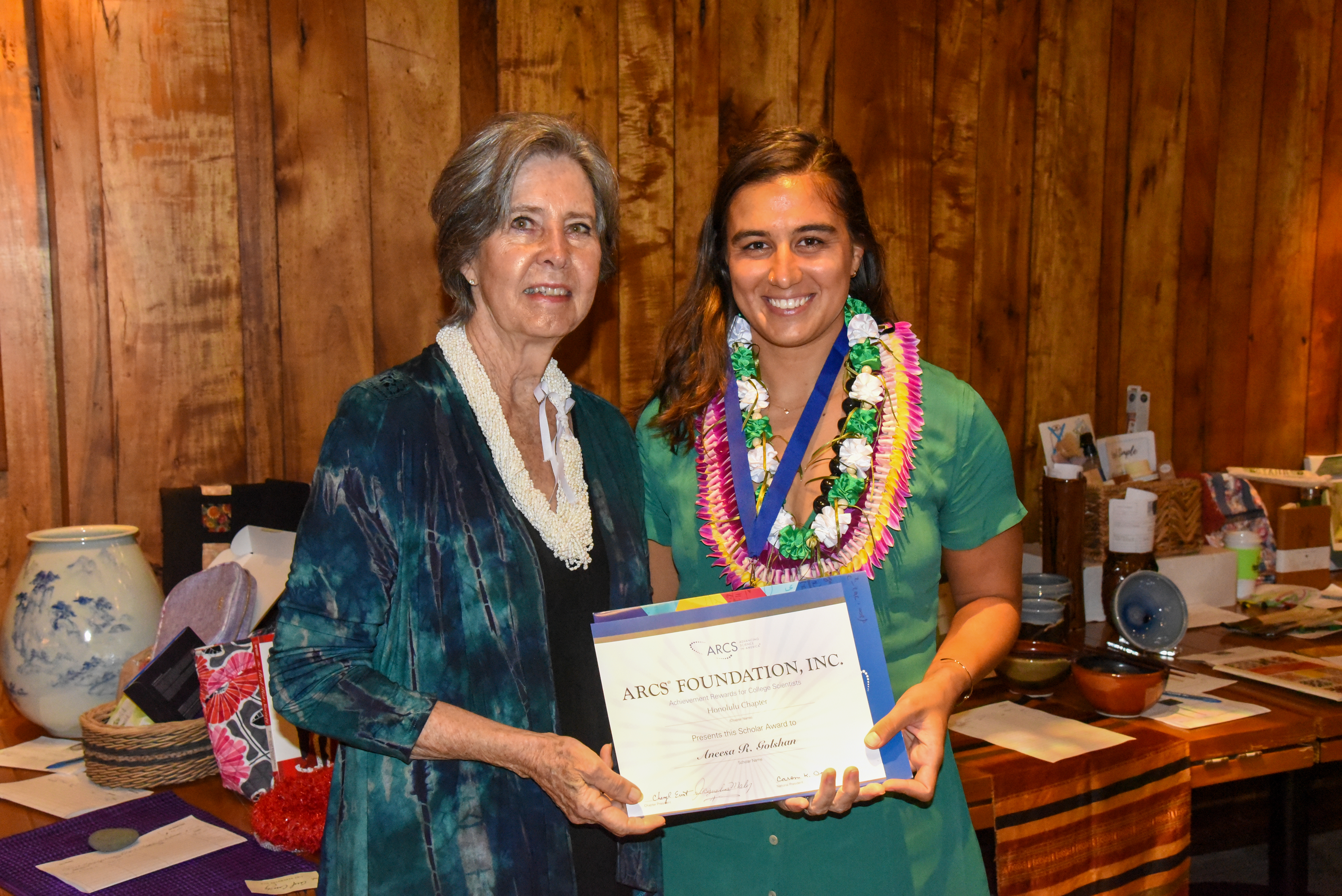
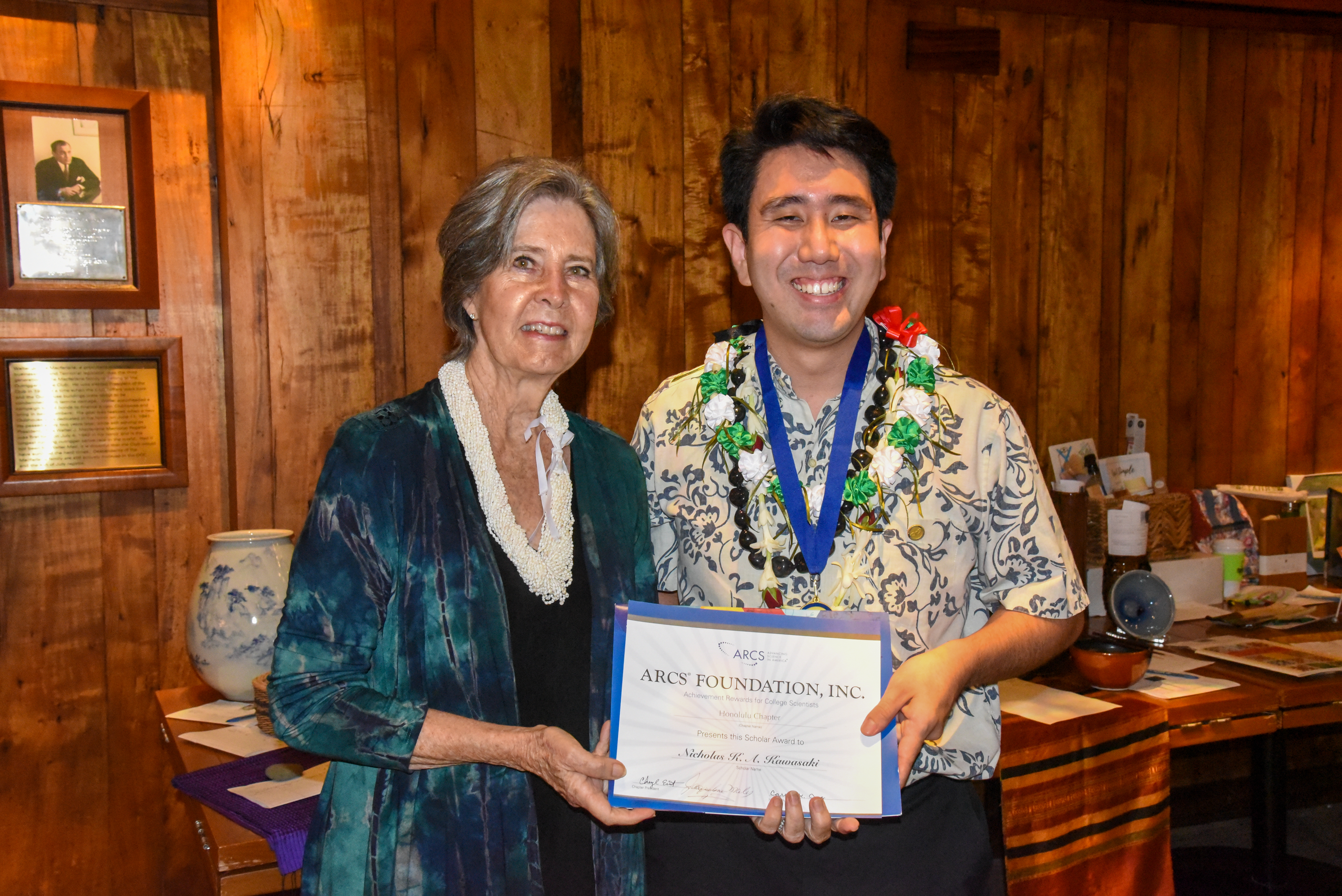
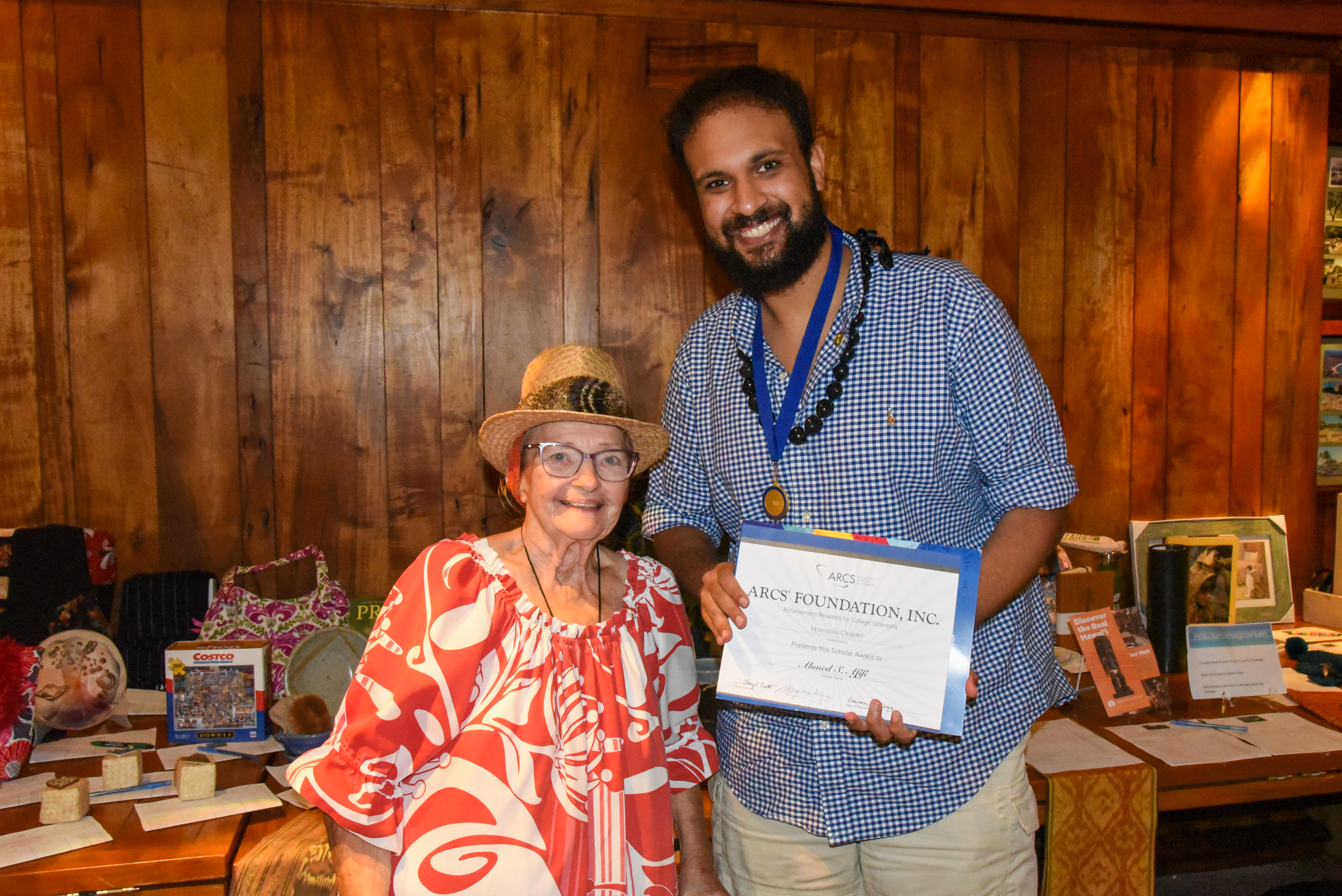
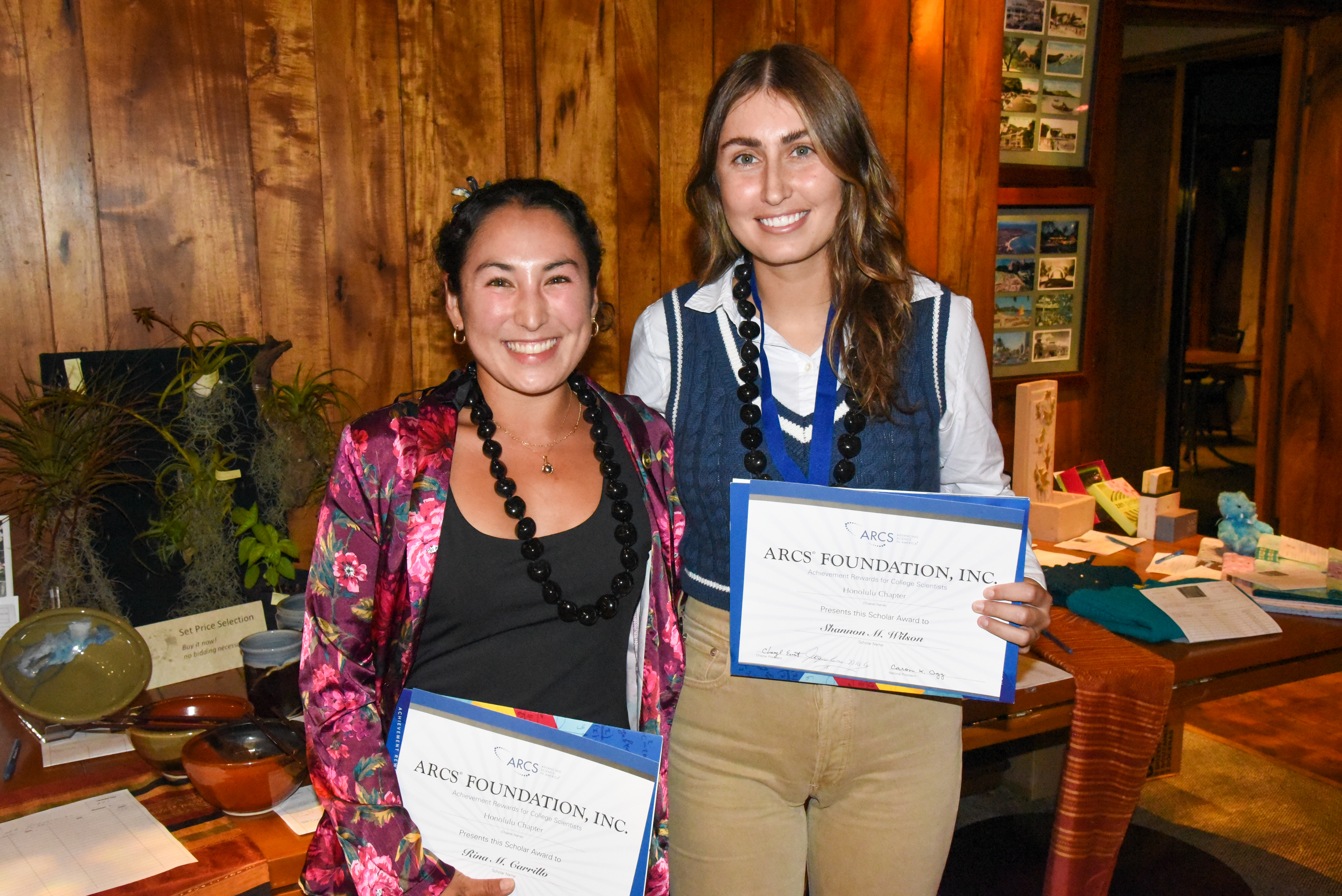
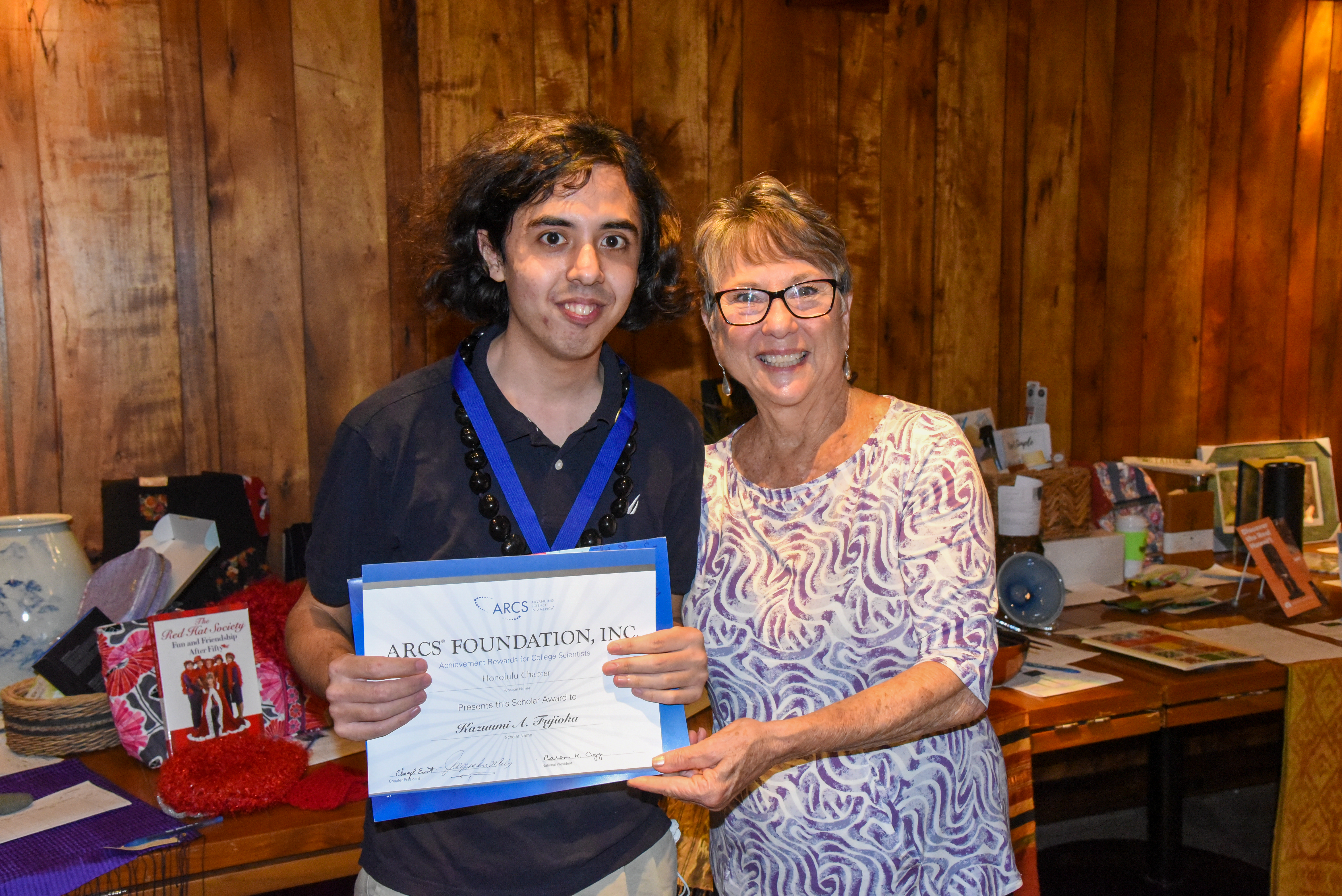
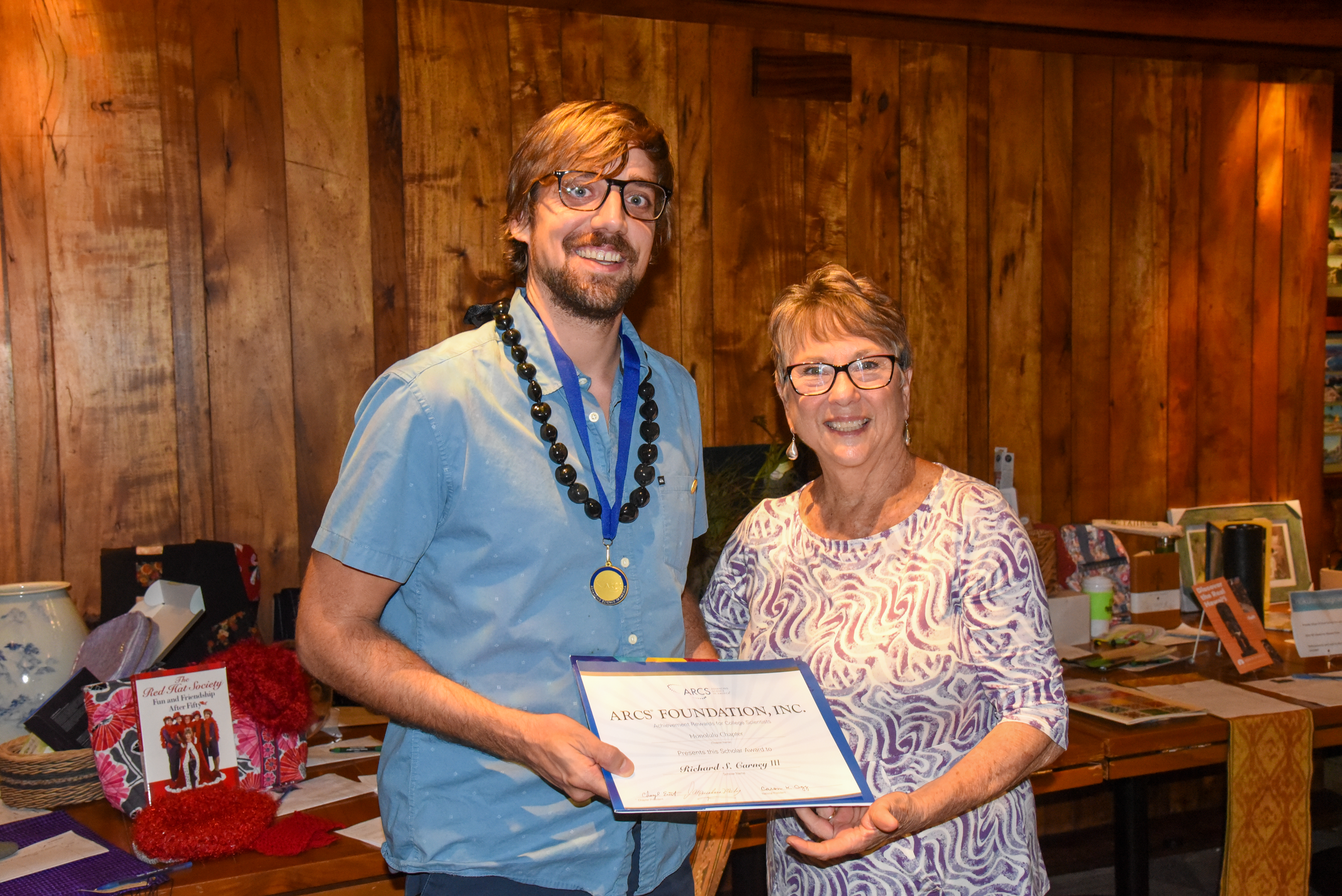
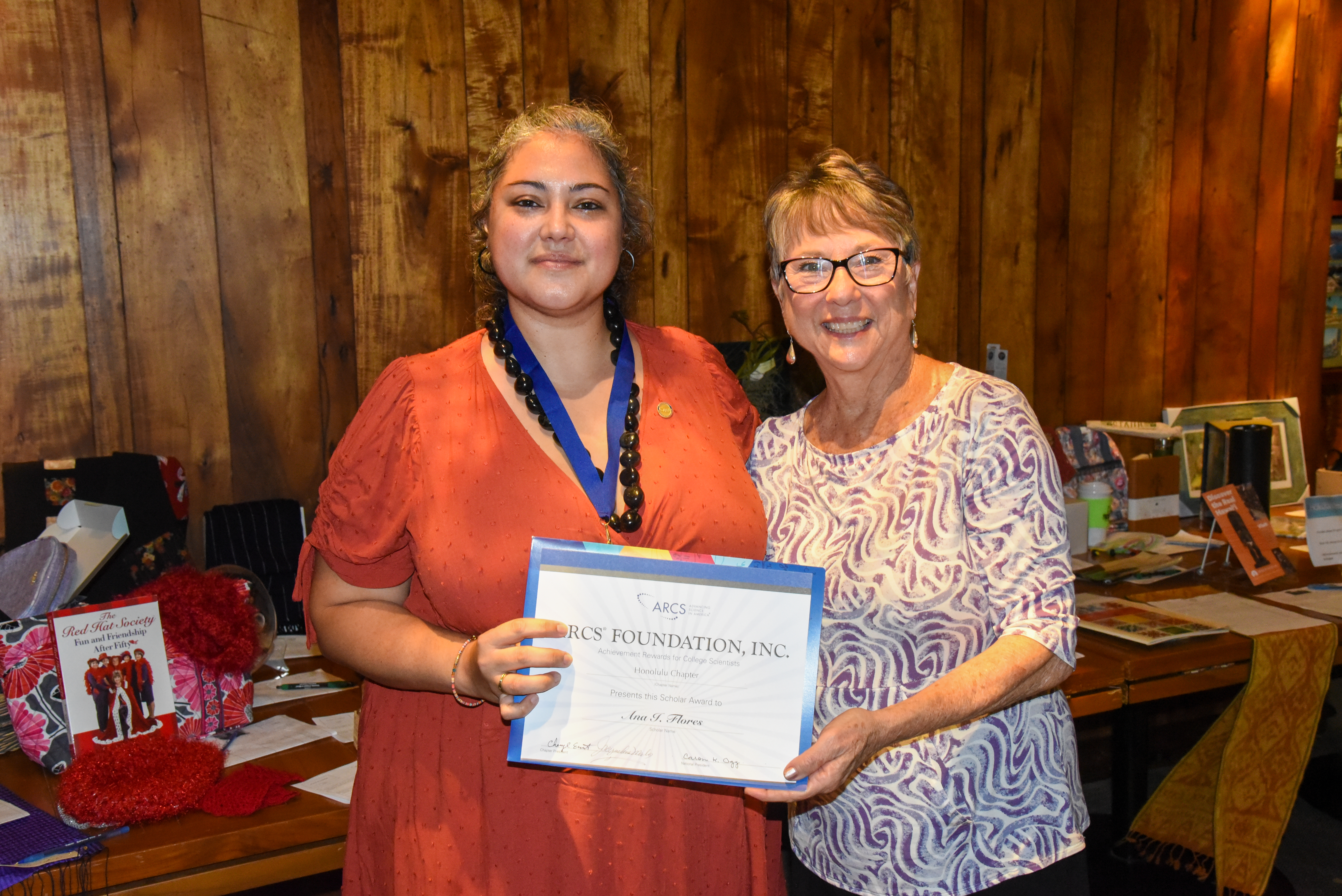
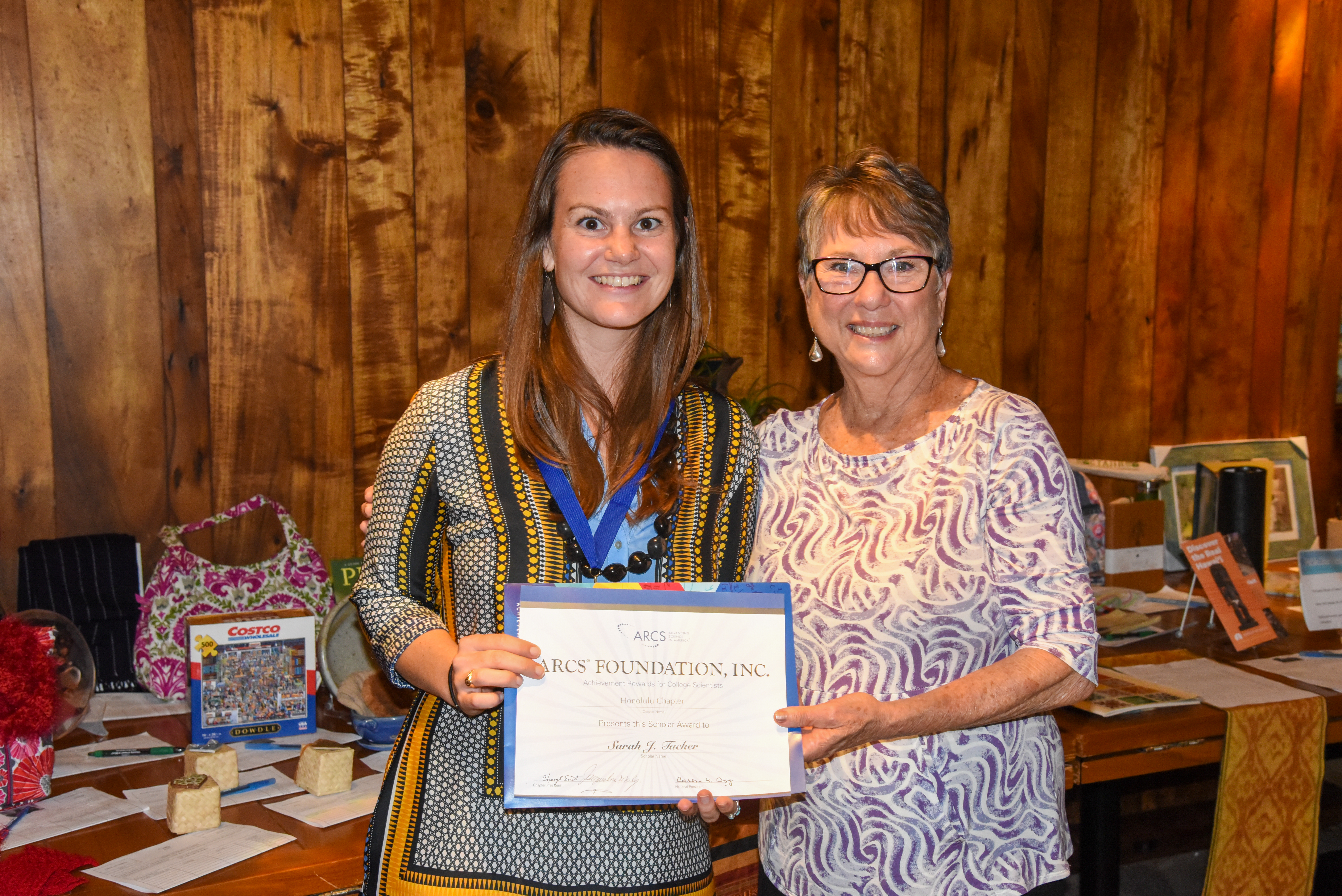
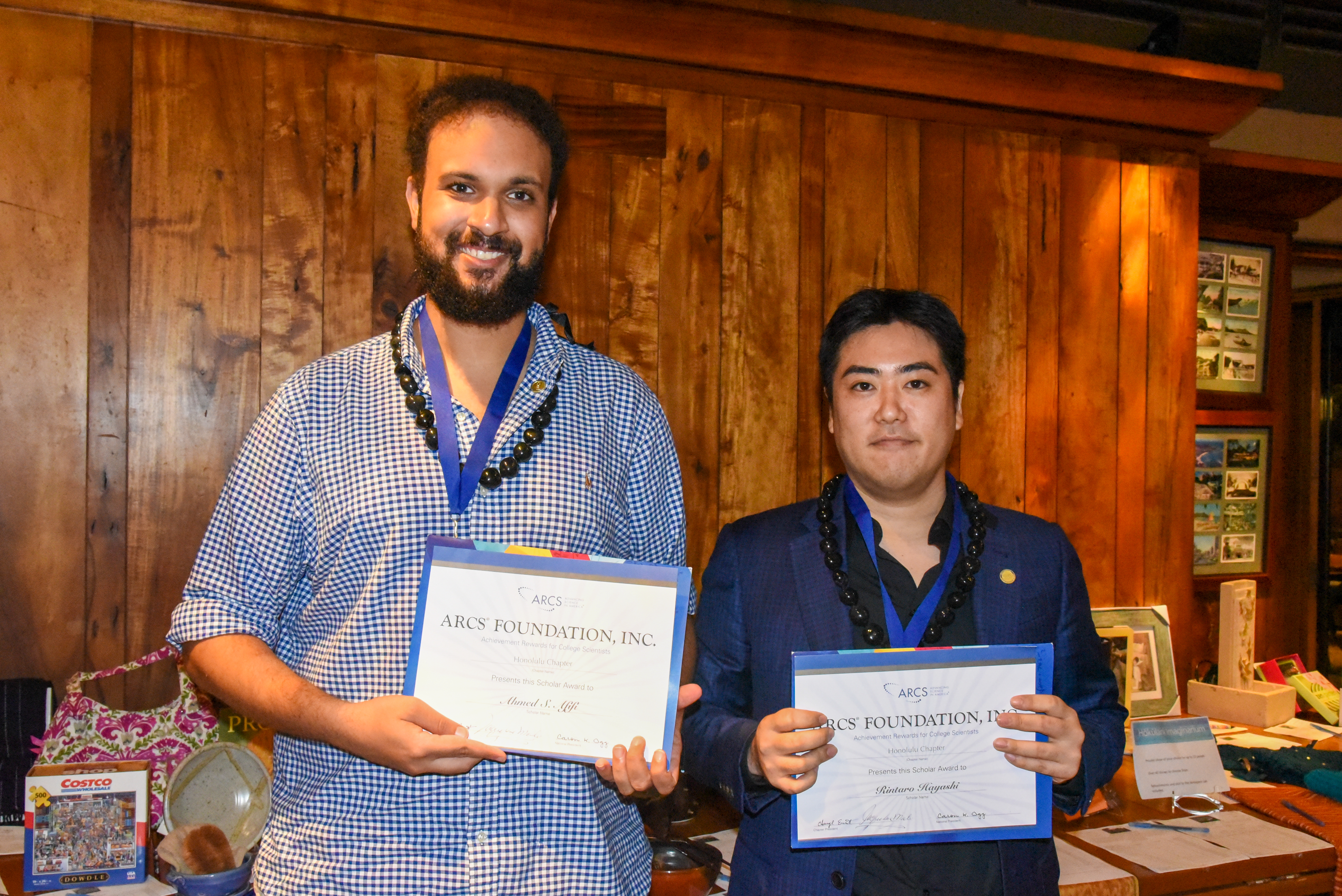
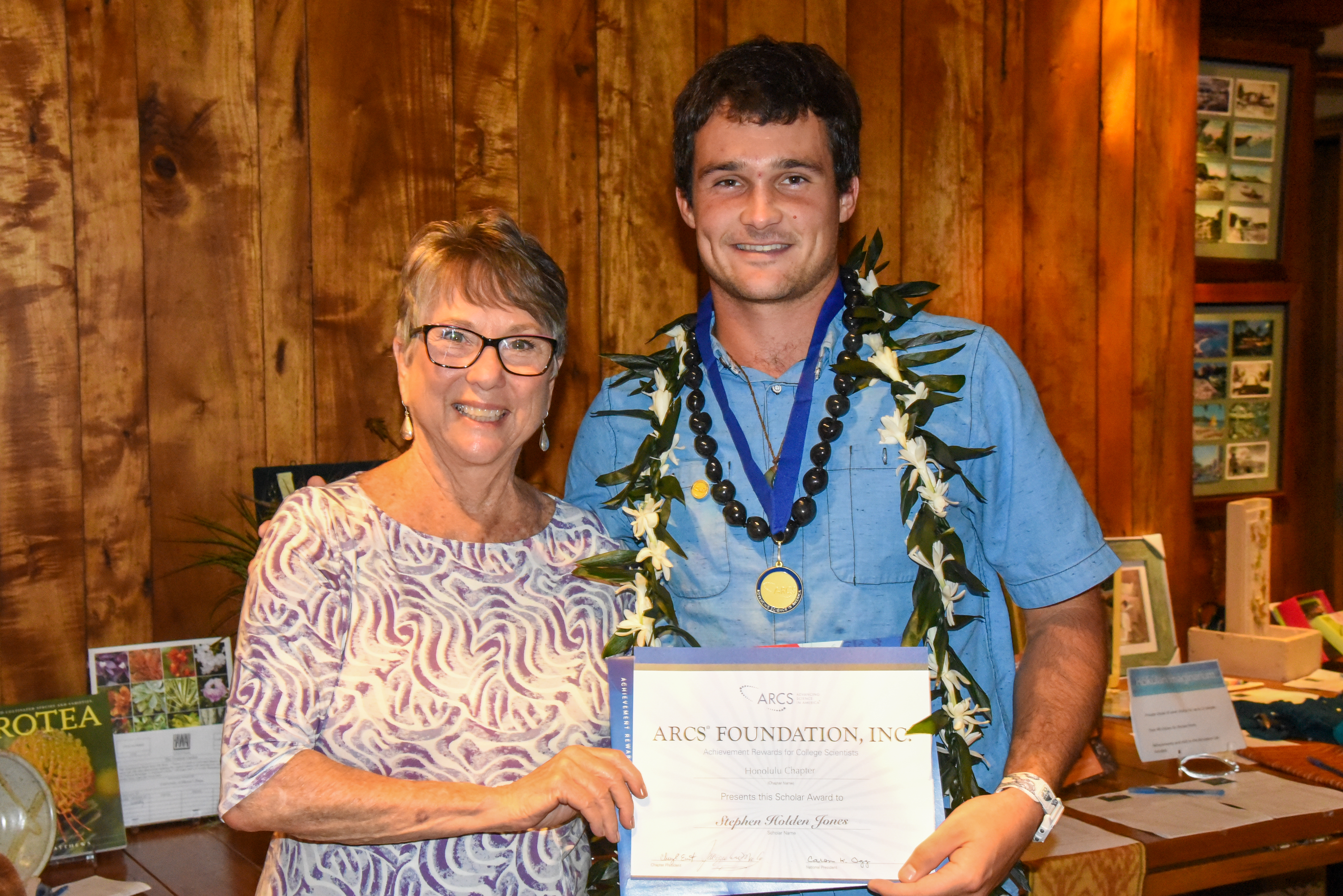
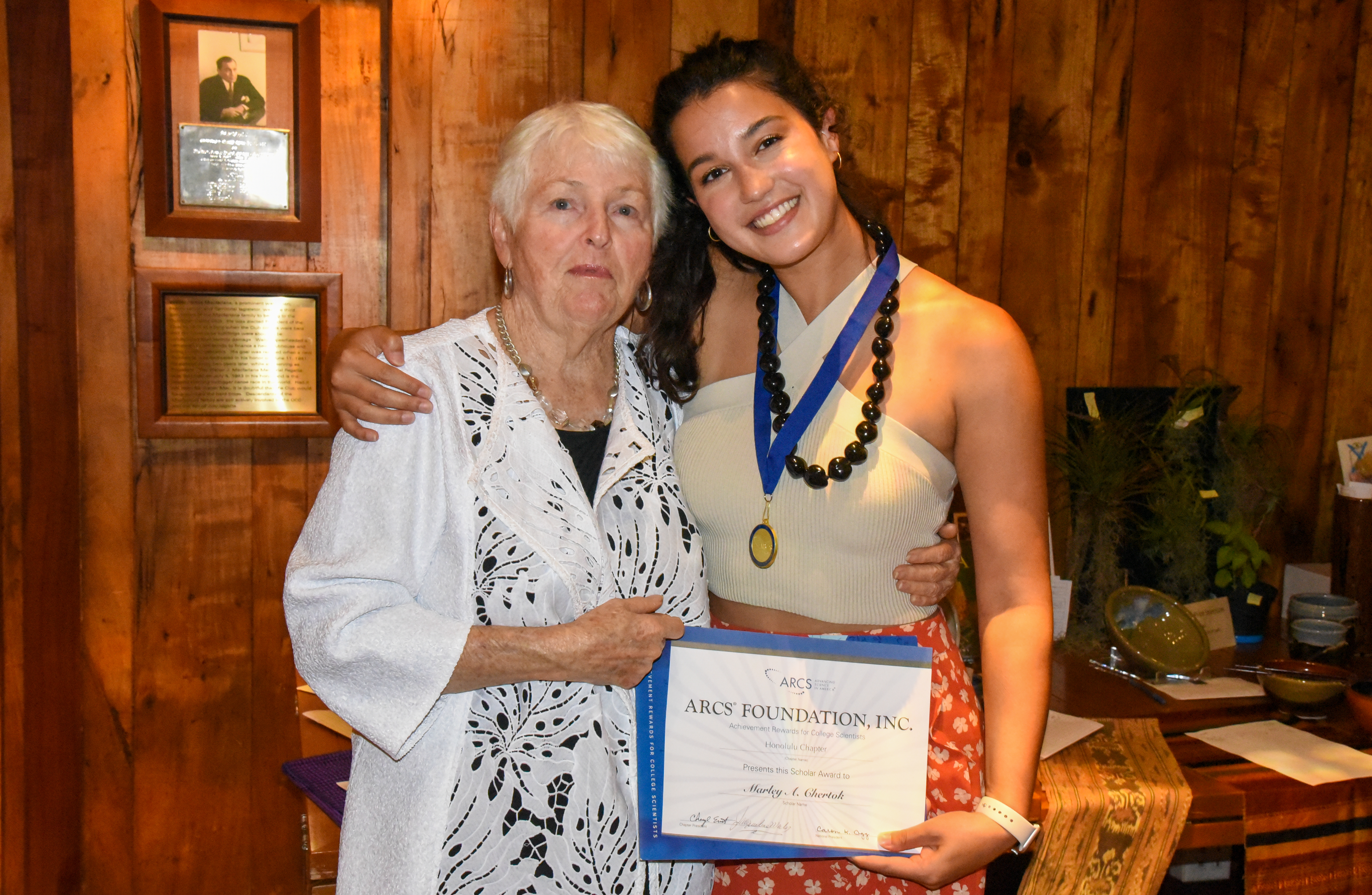
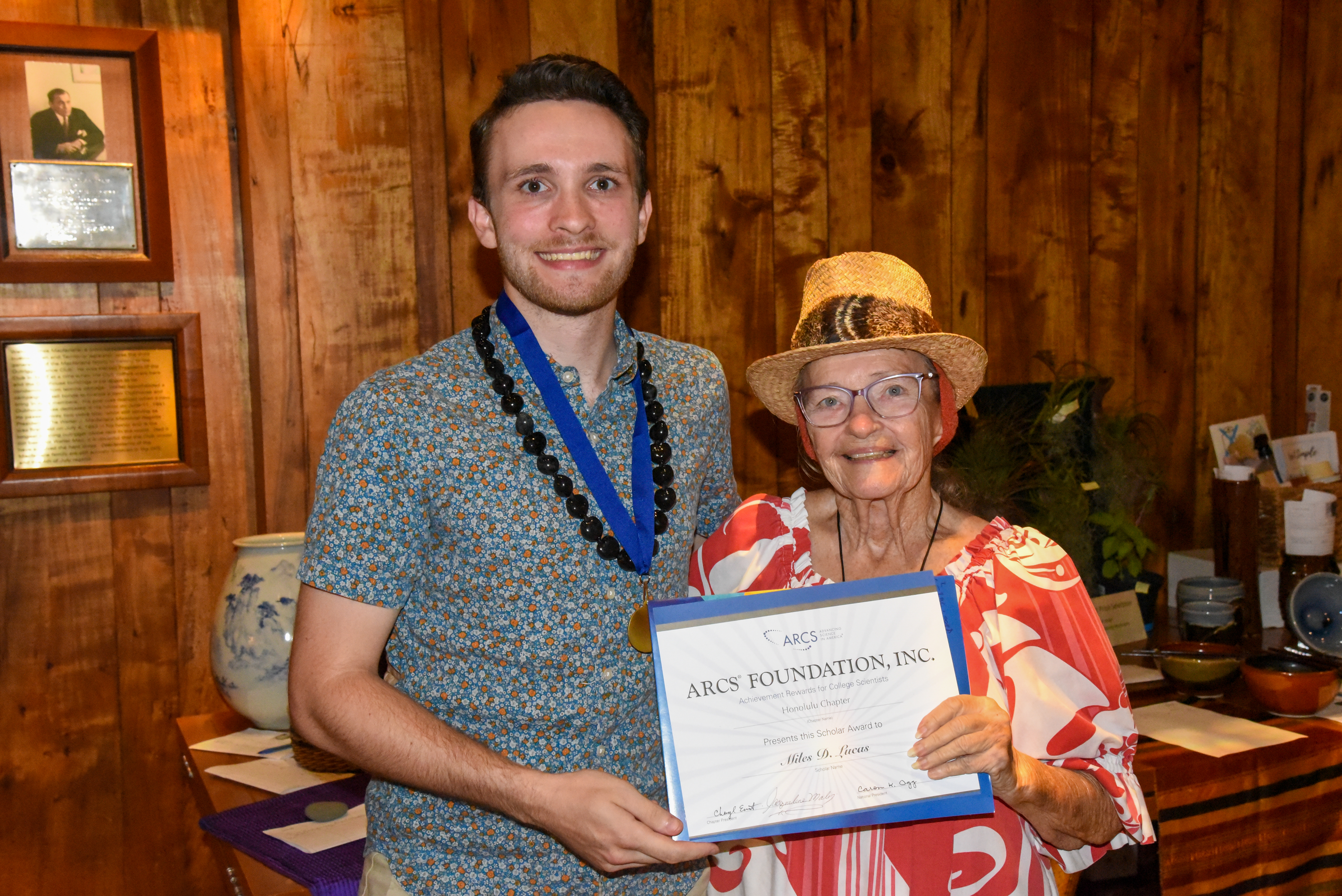
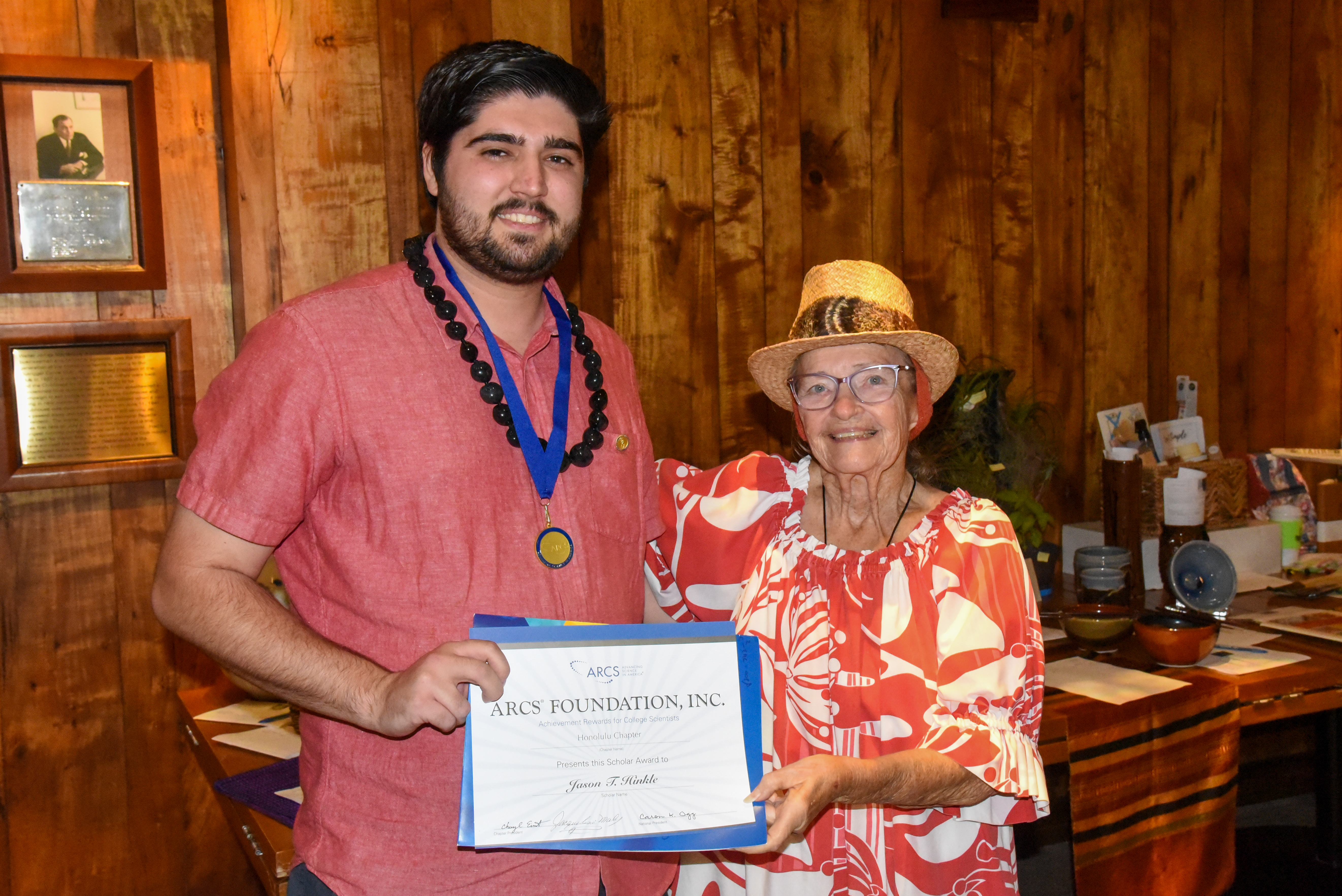
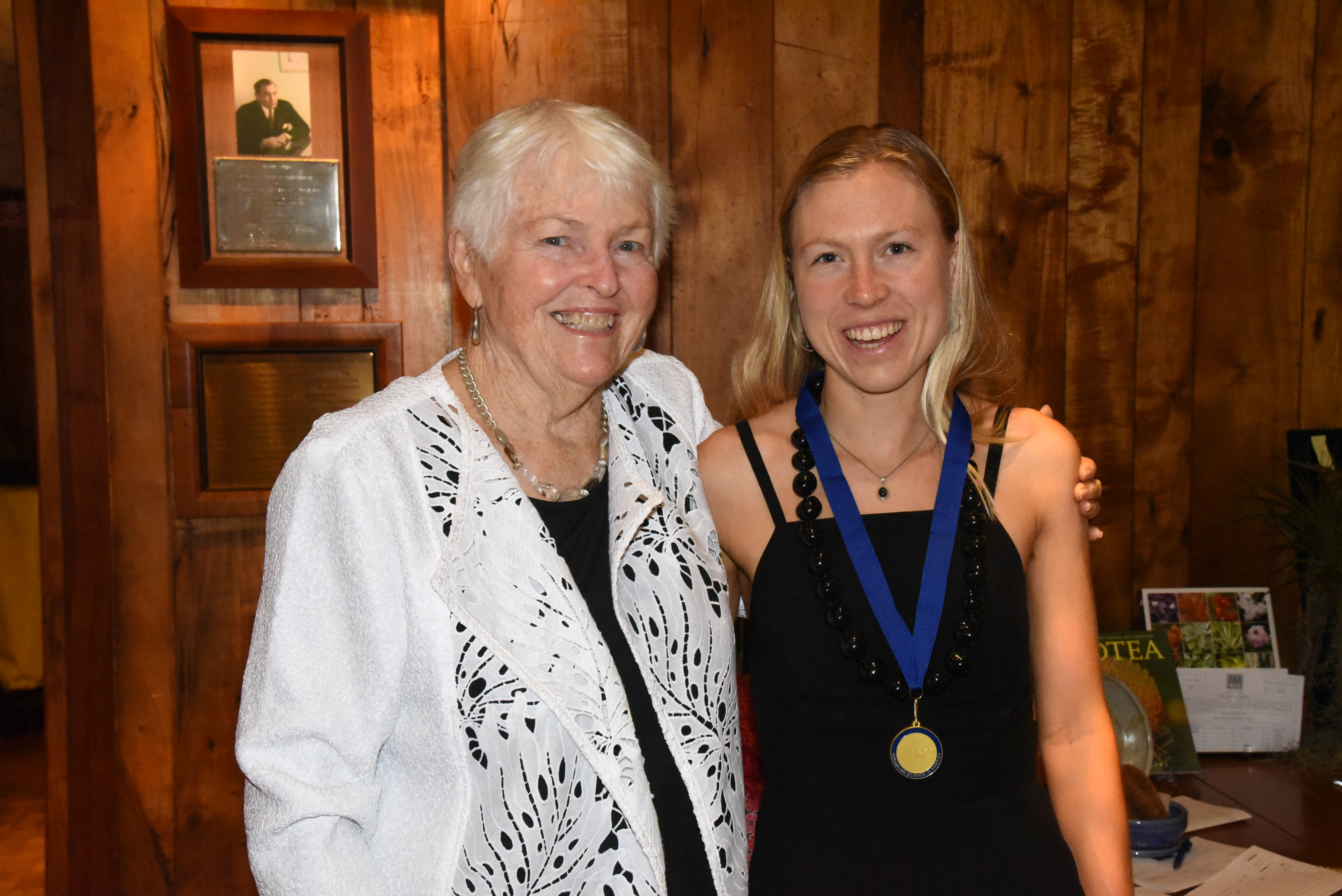
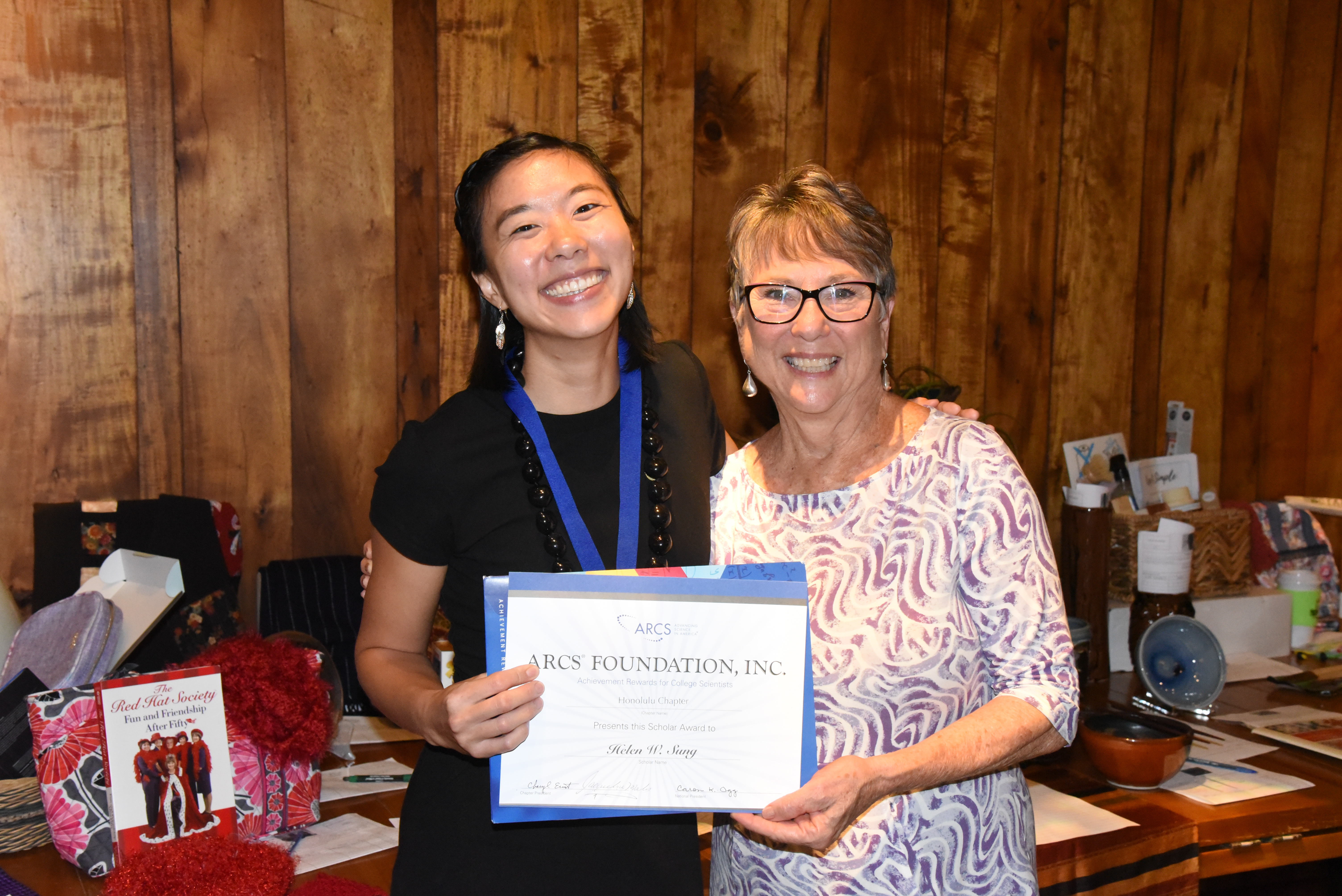
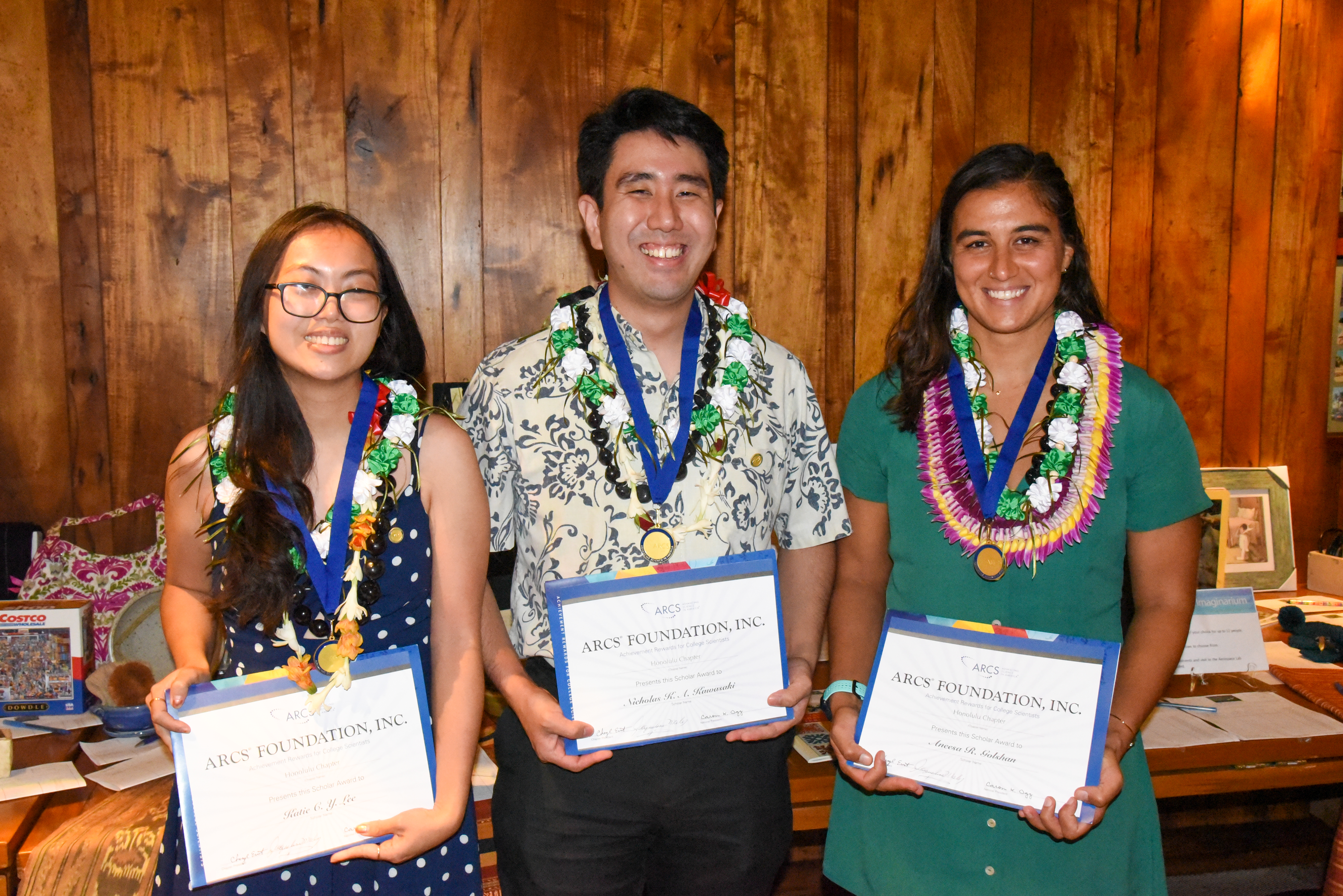
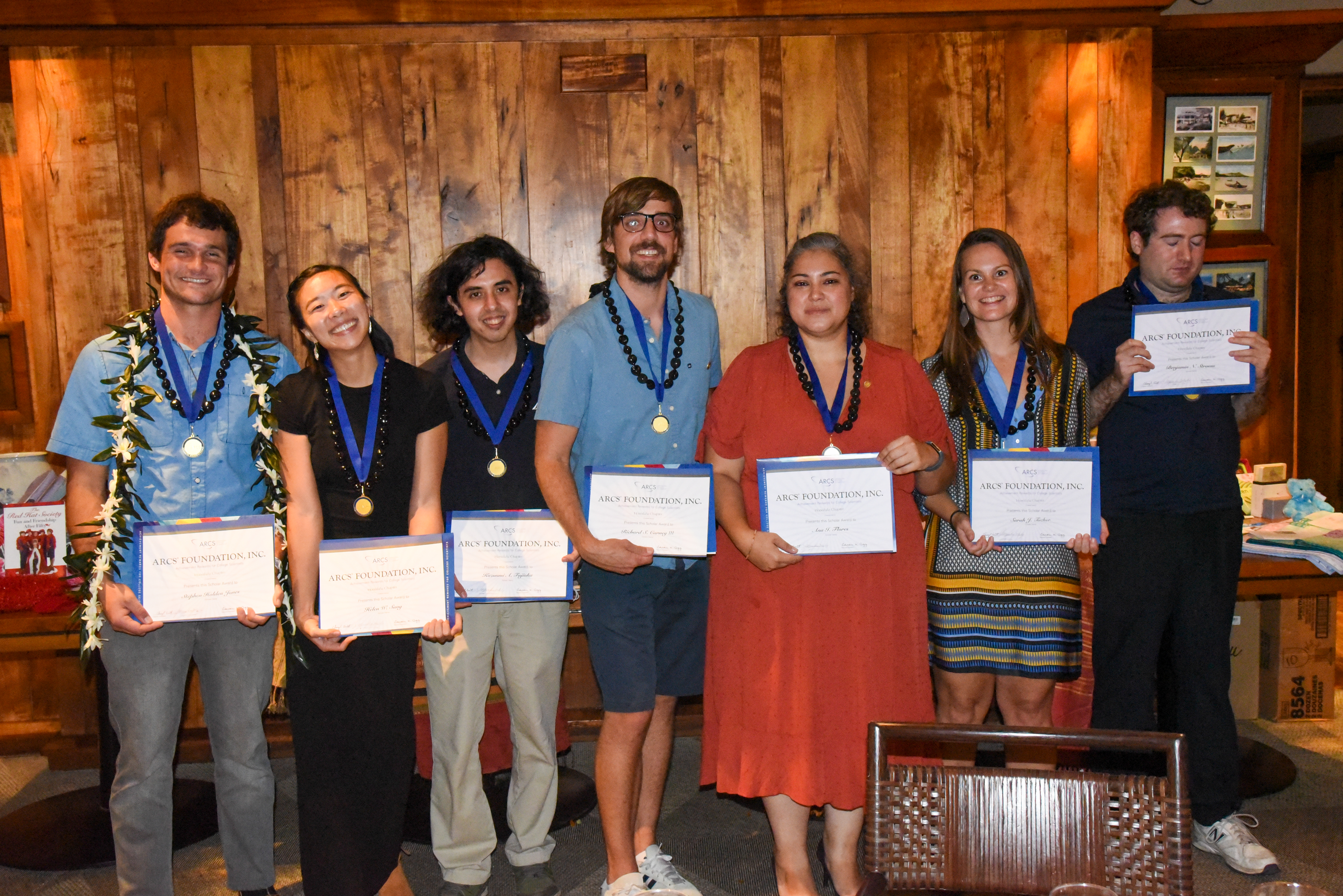
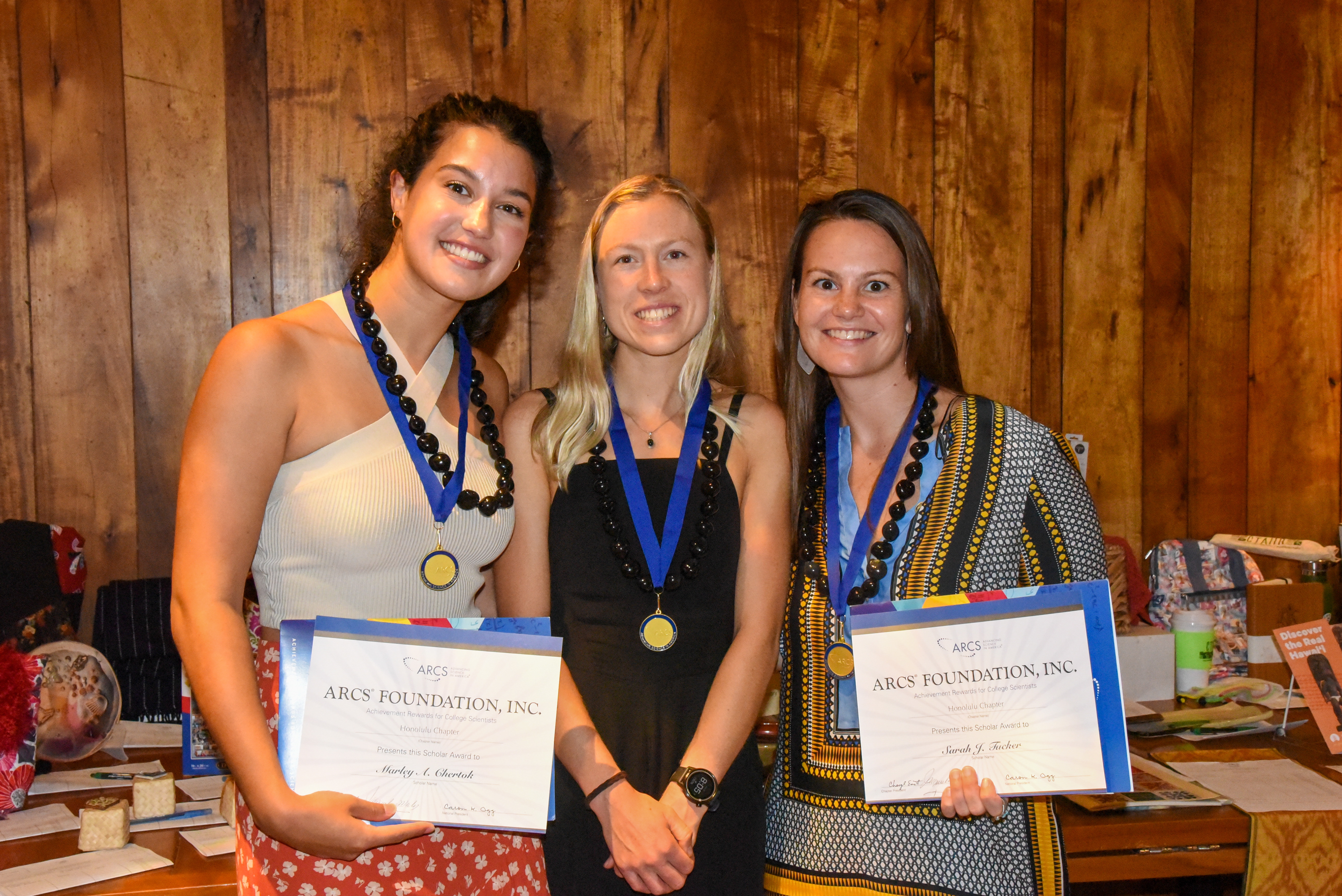
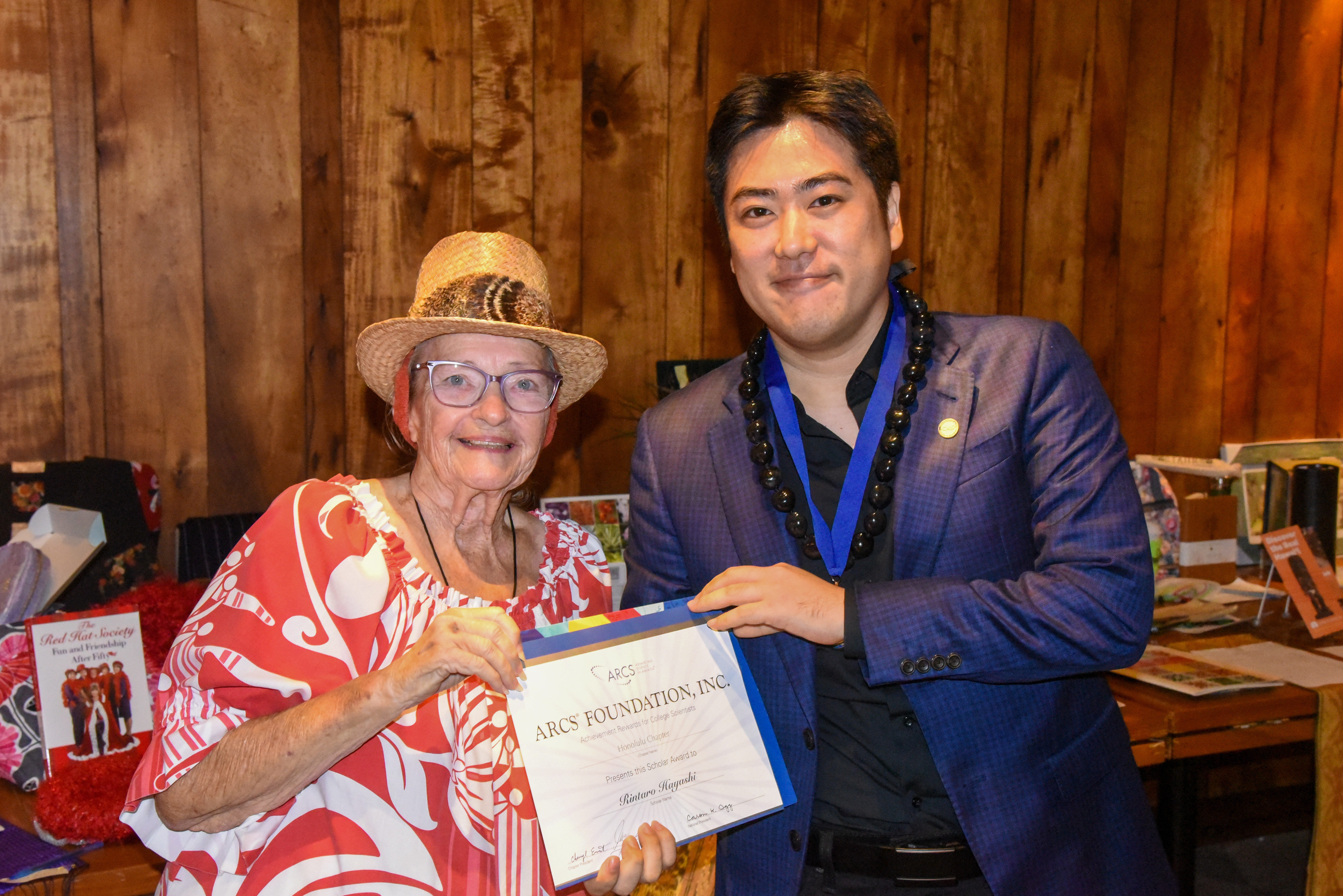
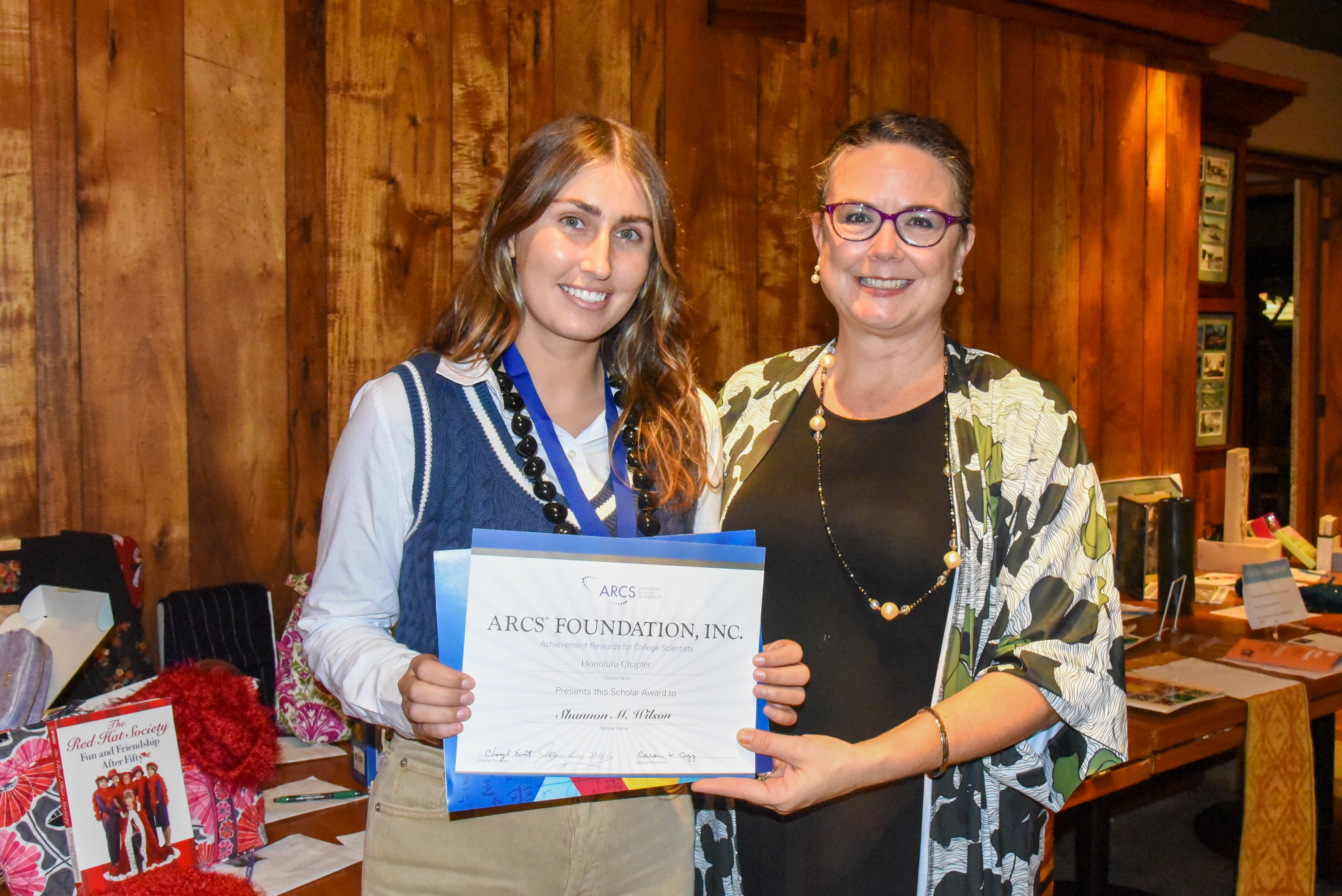
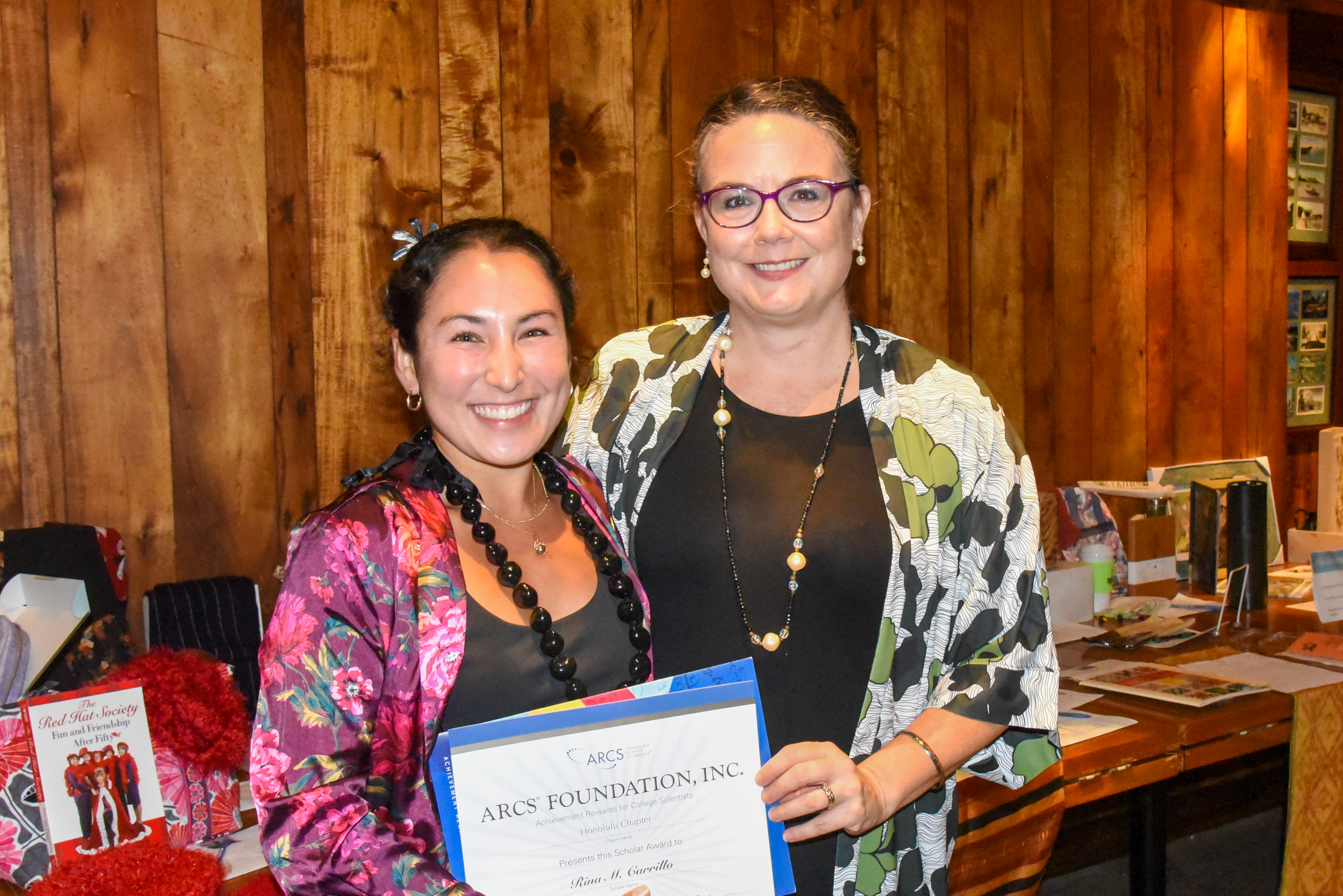
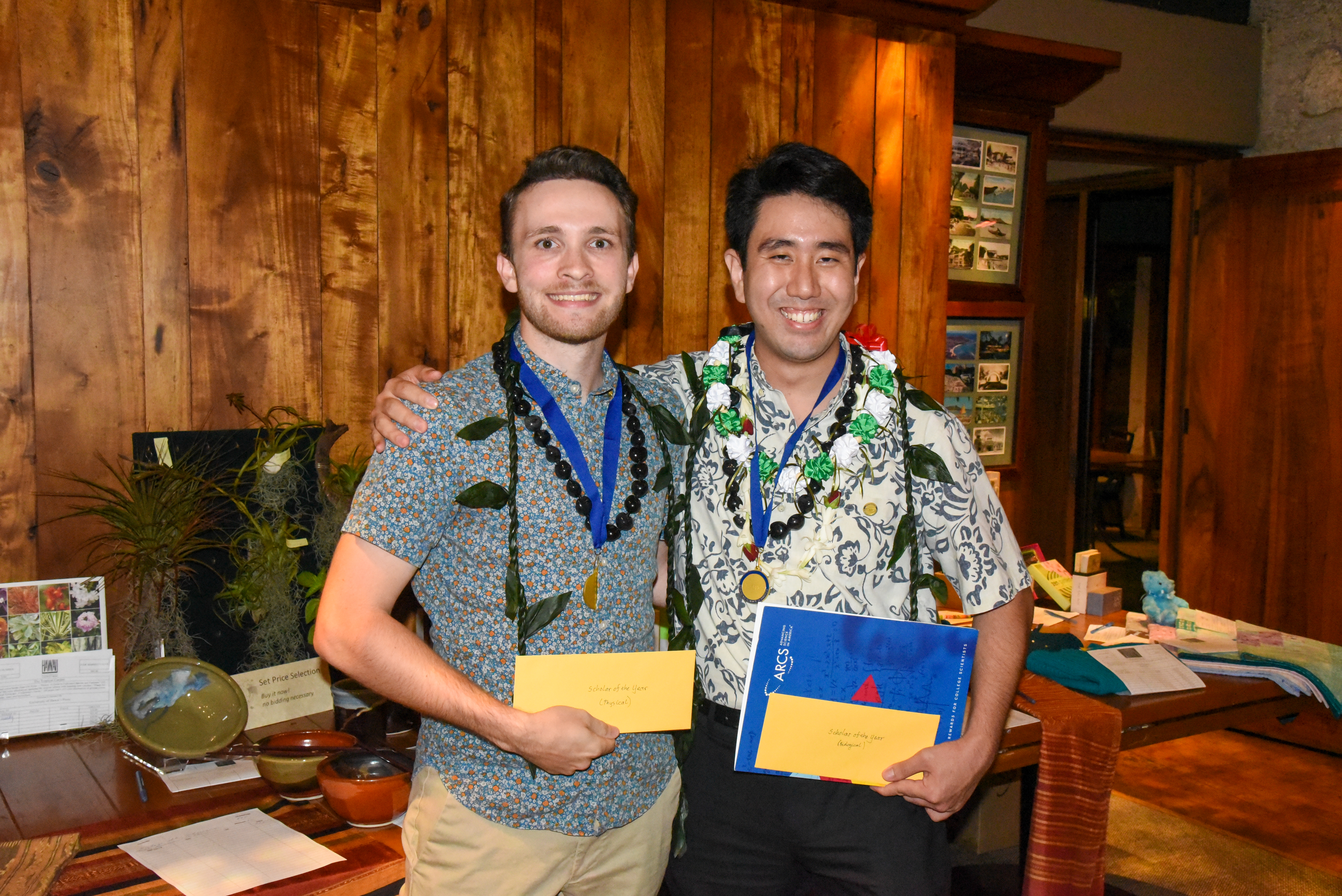
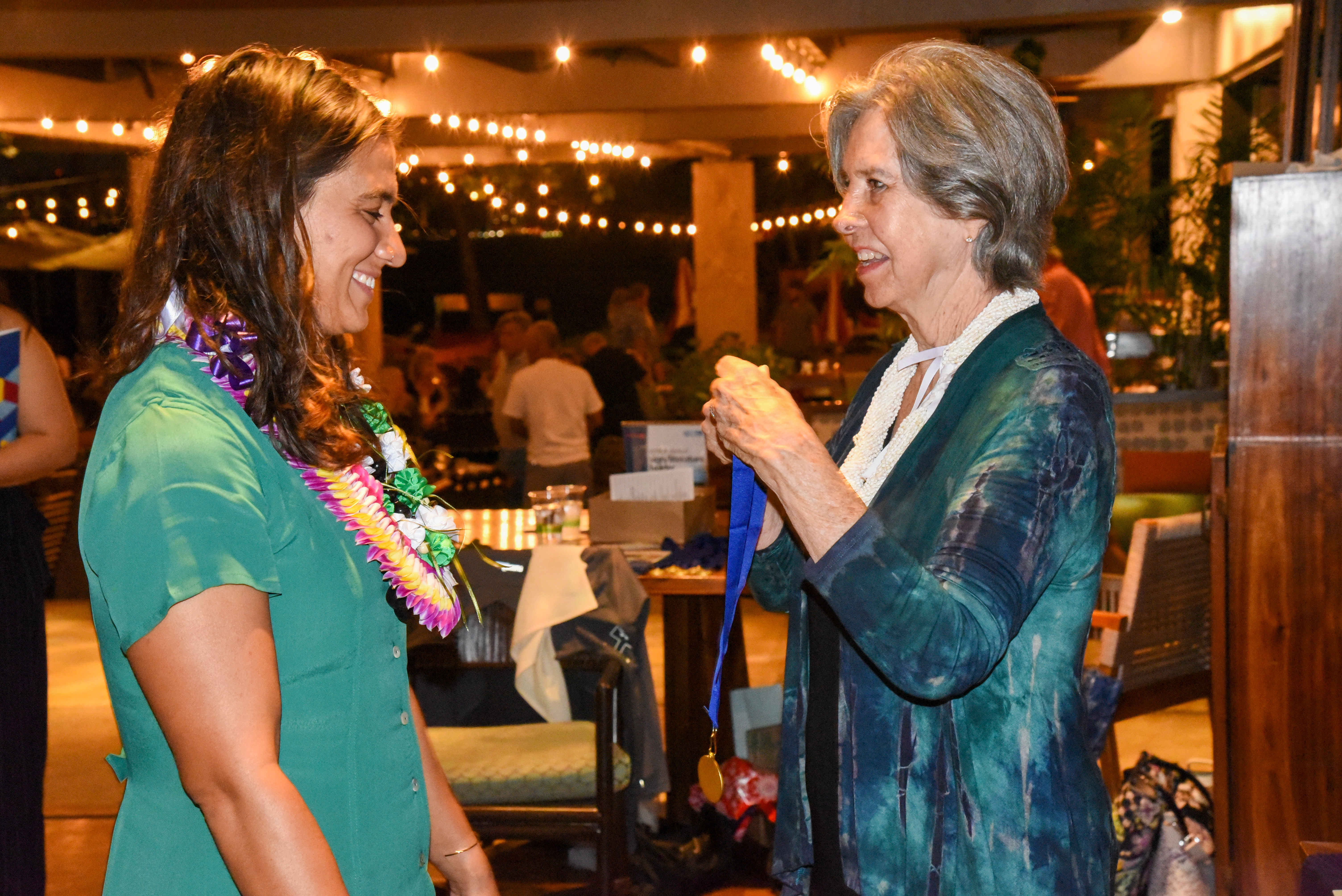
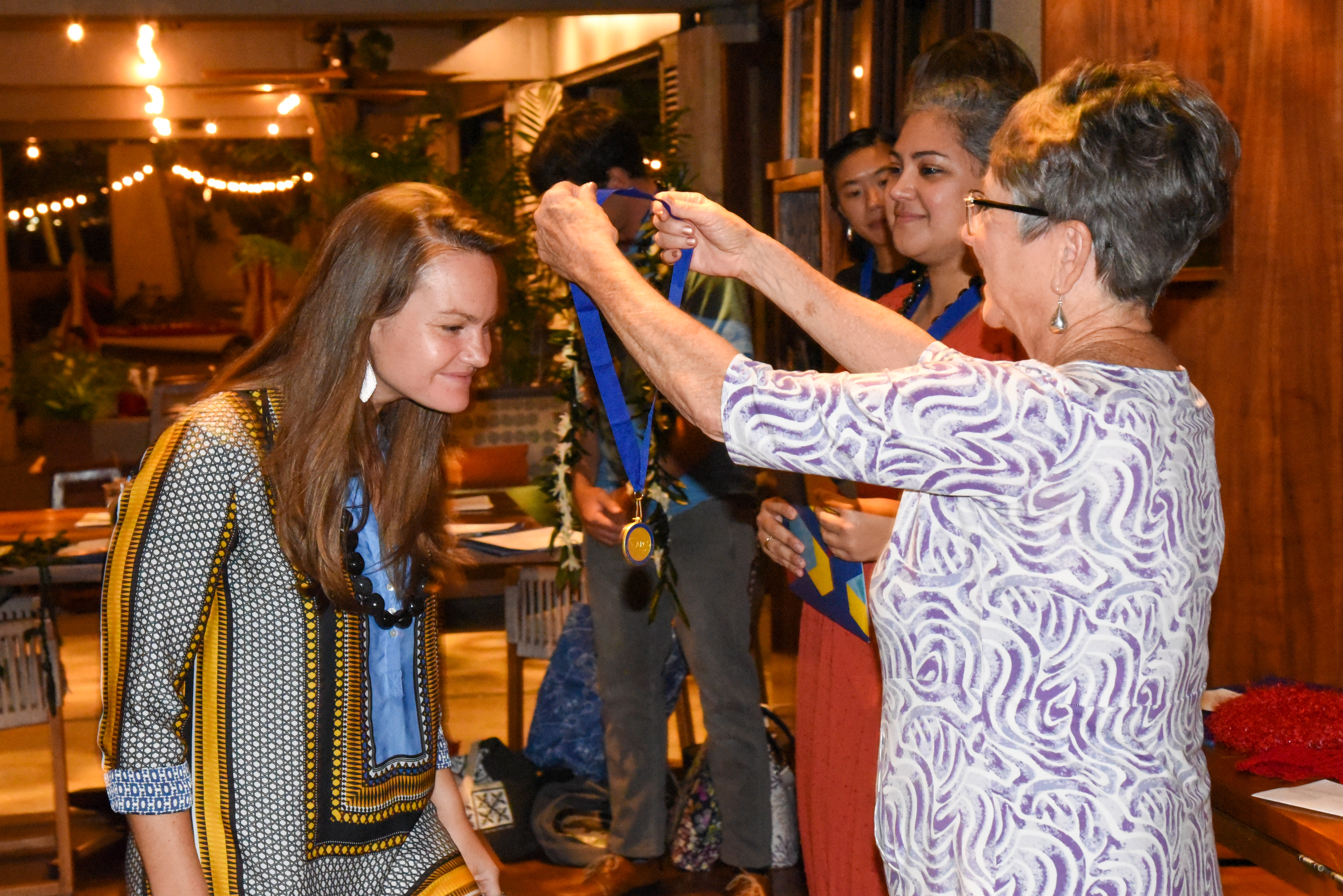
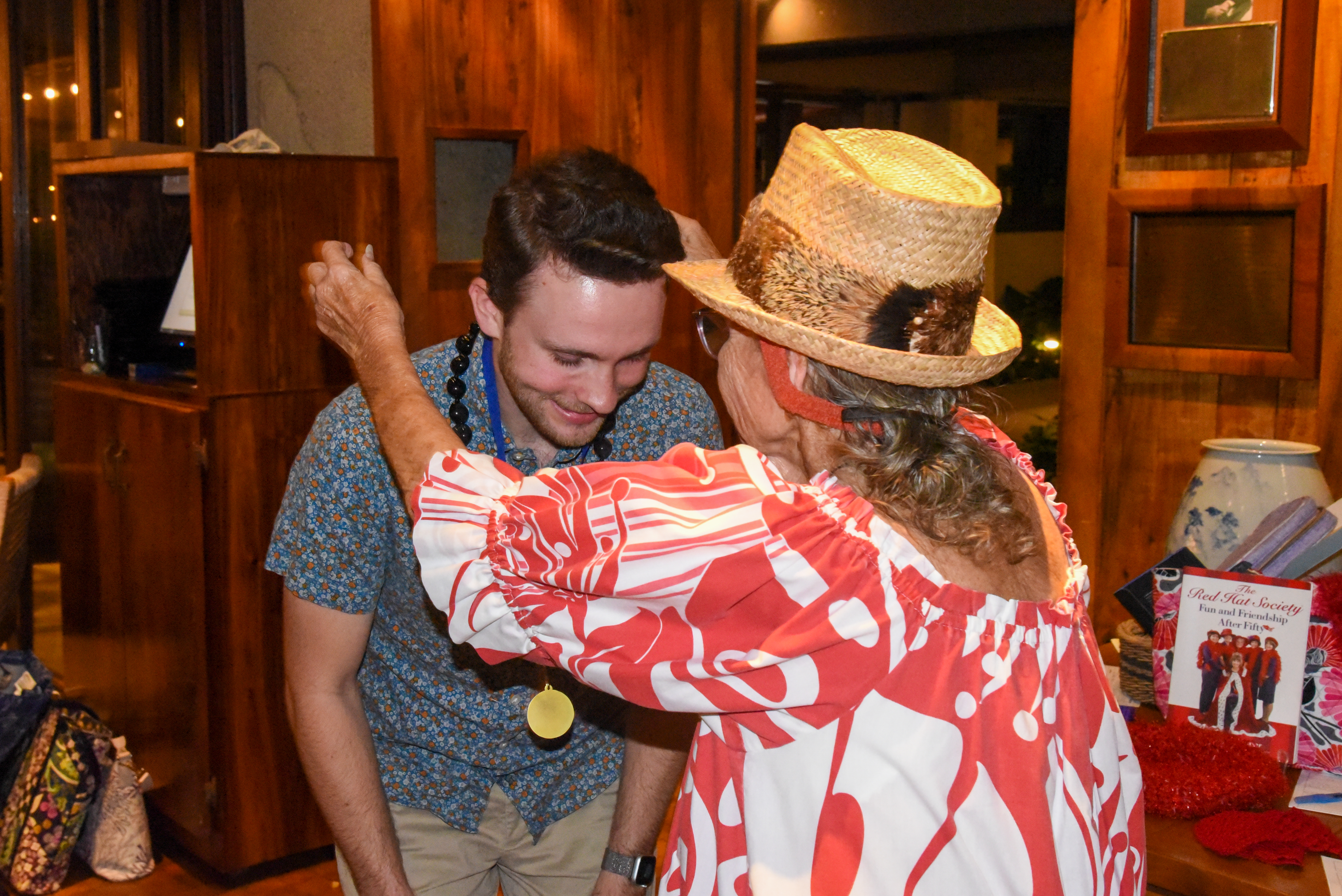
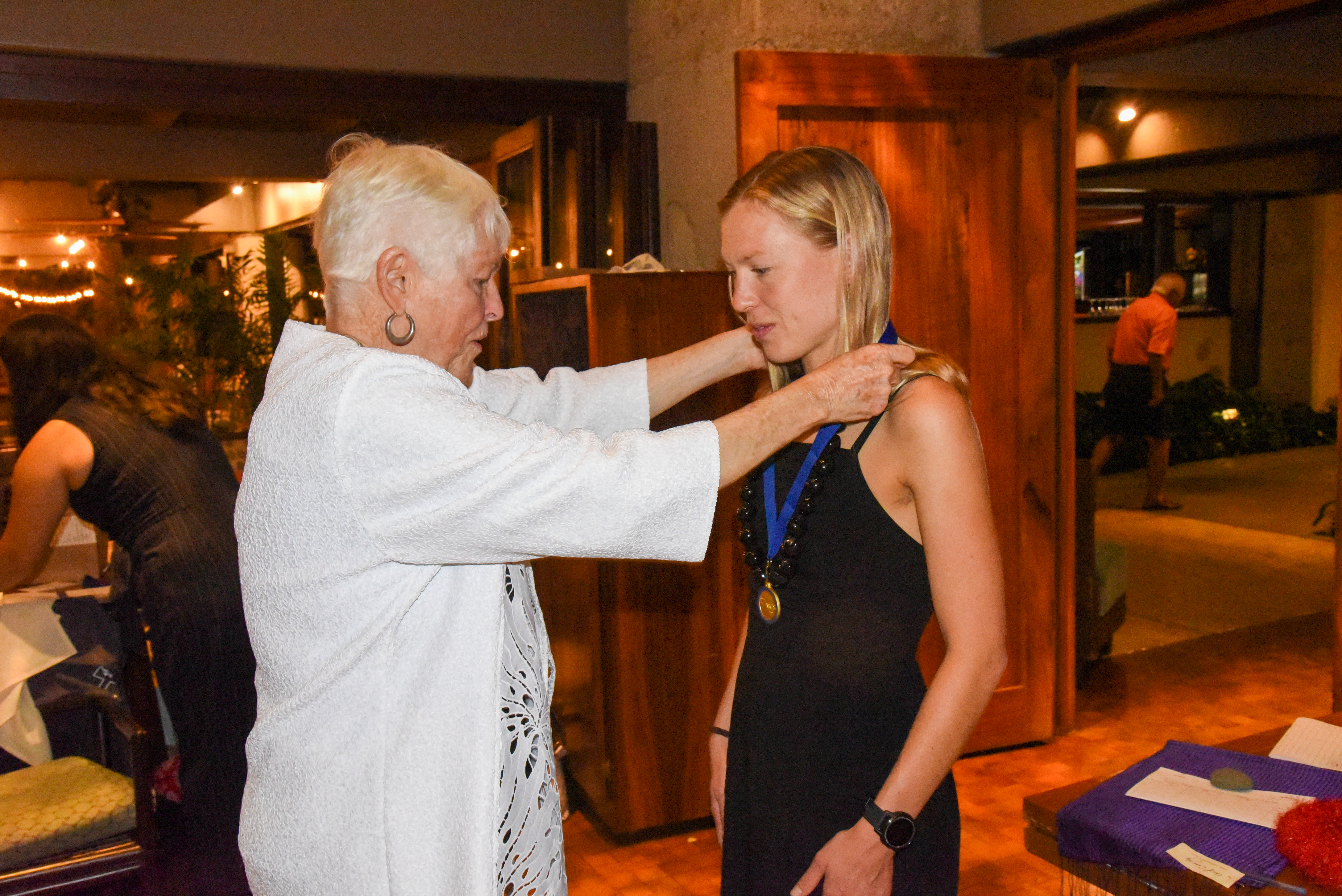
In its first in-person event since the pandemic struck, ARCS Honolulu Chapter presented twenty 2022 ARCS Scholar Awards at the Outrigger Canoe Club May 5. Miles Lucas was named ARCS Scholar of the Year (Physical Sciences) for his work to design instruments, observational techniques and processing methods for directly imaging exoplanets and planet-forming regions in the hopes of “seeing” largely invisible gasses will help explain planet formation. Nicholas Kawasaki was named ARCS Scholar of the Year (Biological Sciences) for his investigation of ferroptosis, an iron-dependent form of cell death that occurs in the heart after blood flow is restored following a heart attack.
Read more about the 2022 Scholars or view their videos, in which they describe their research.
Special guests included the 2021 Scholar of the Year, asronomy scholar Erica Bufanda, and 1987 ARCS Scholar Paul Lucey, University of Hawai‘i at Manoa earth scientist who is he advisor to 2022 Scholar Marley Chertok.
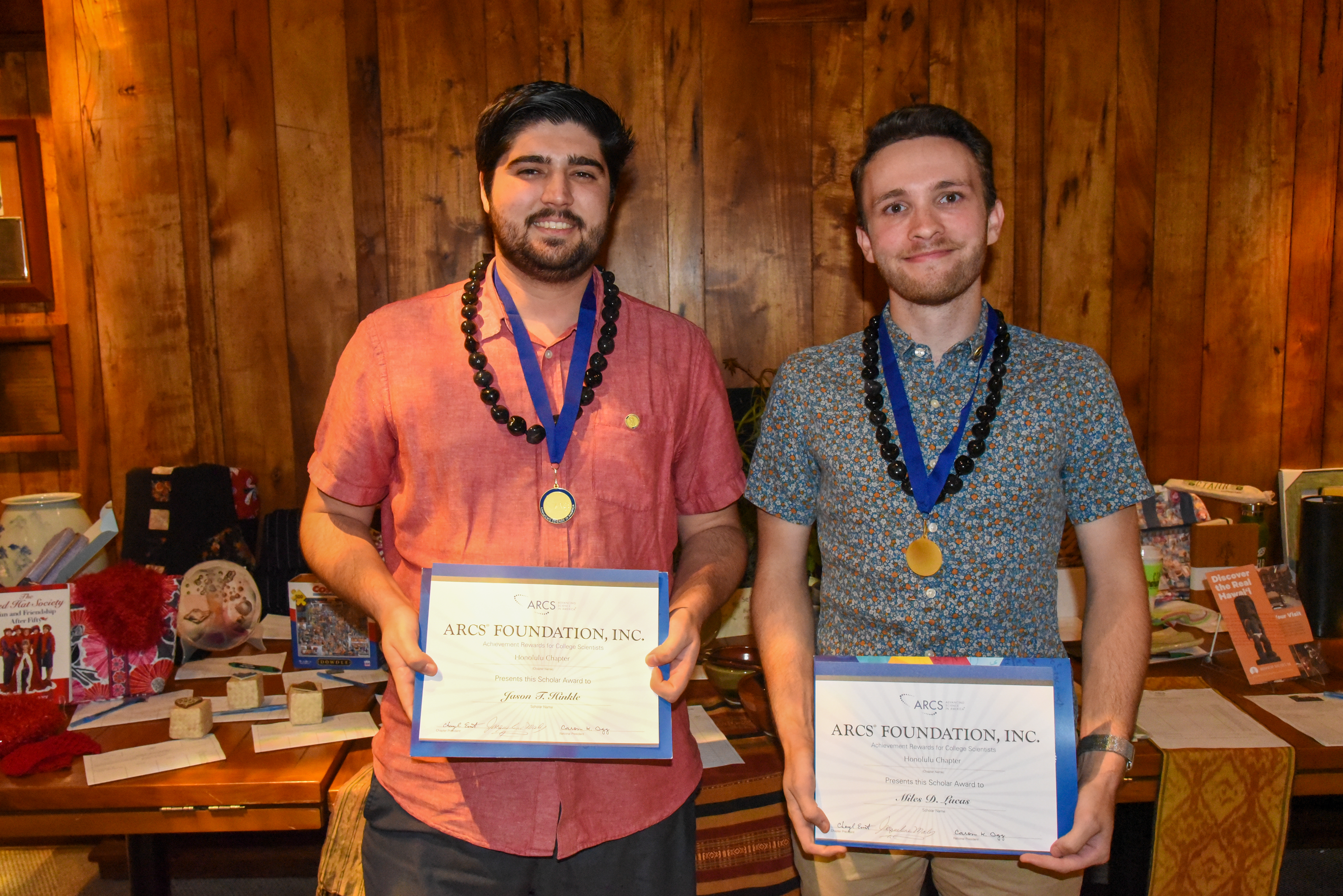
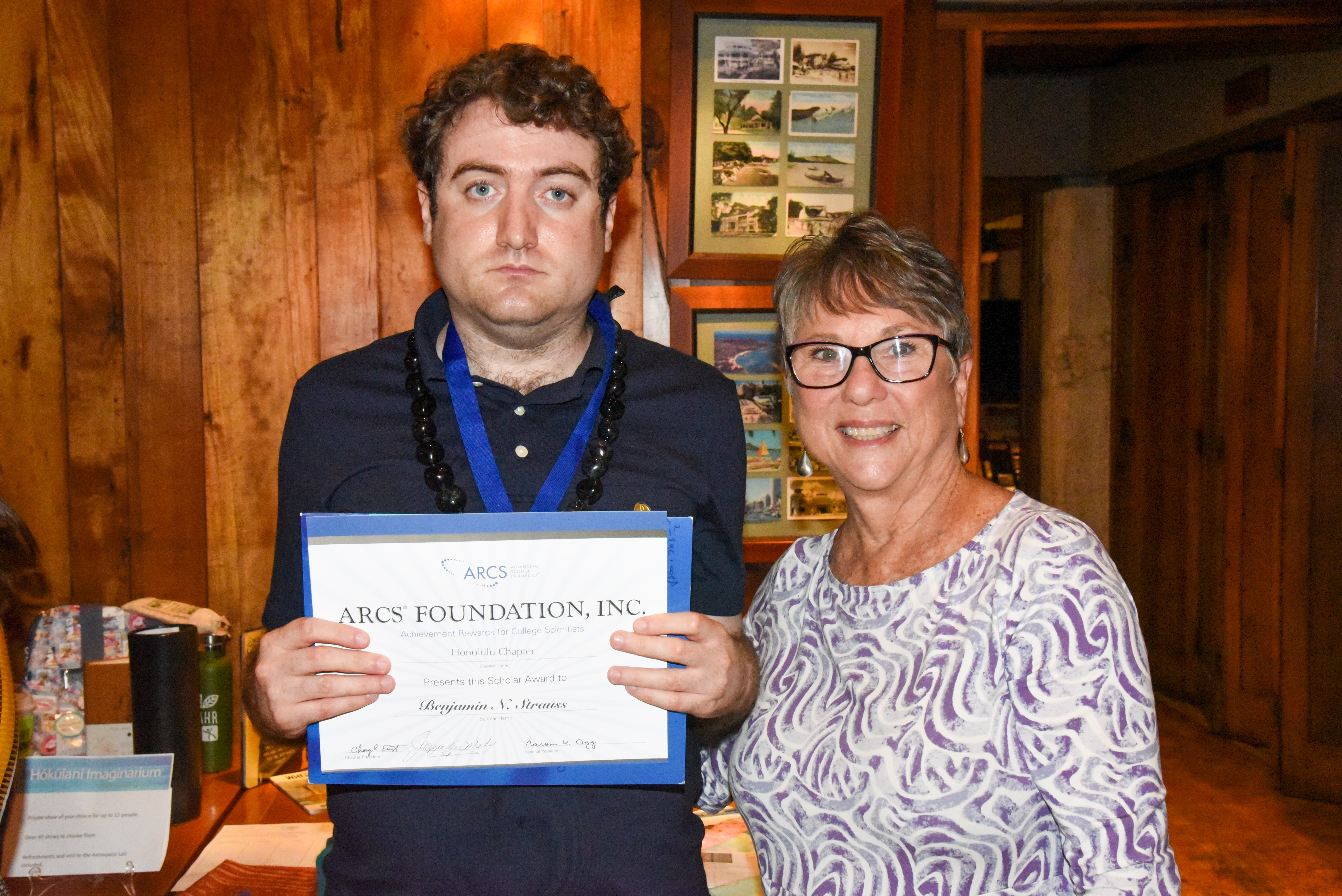
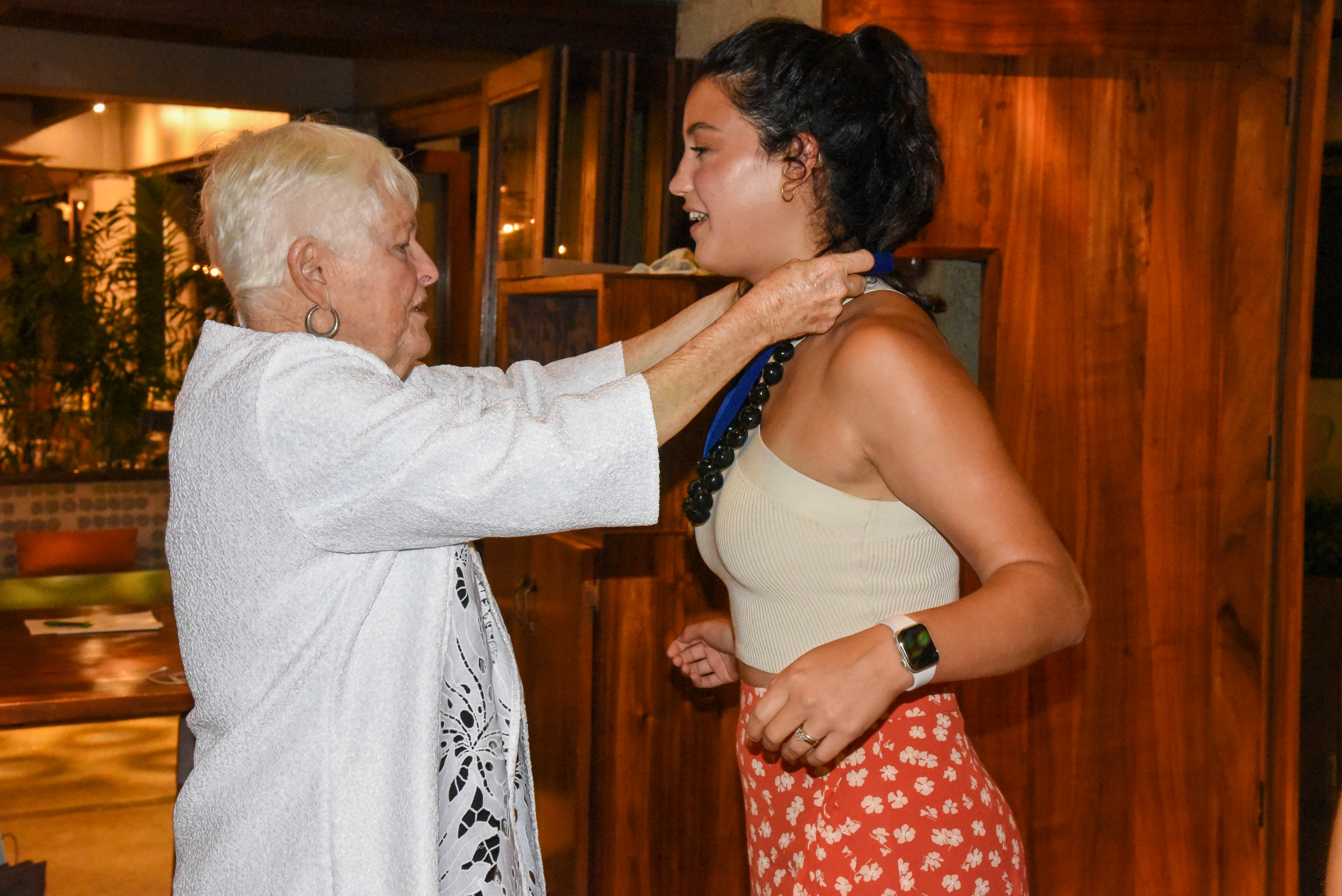
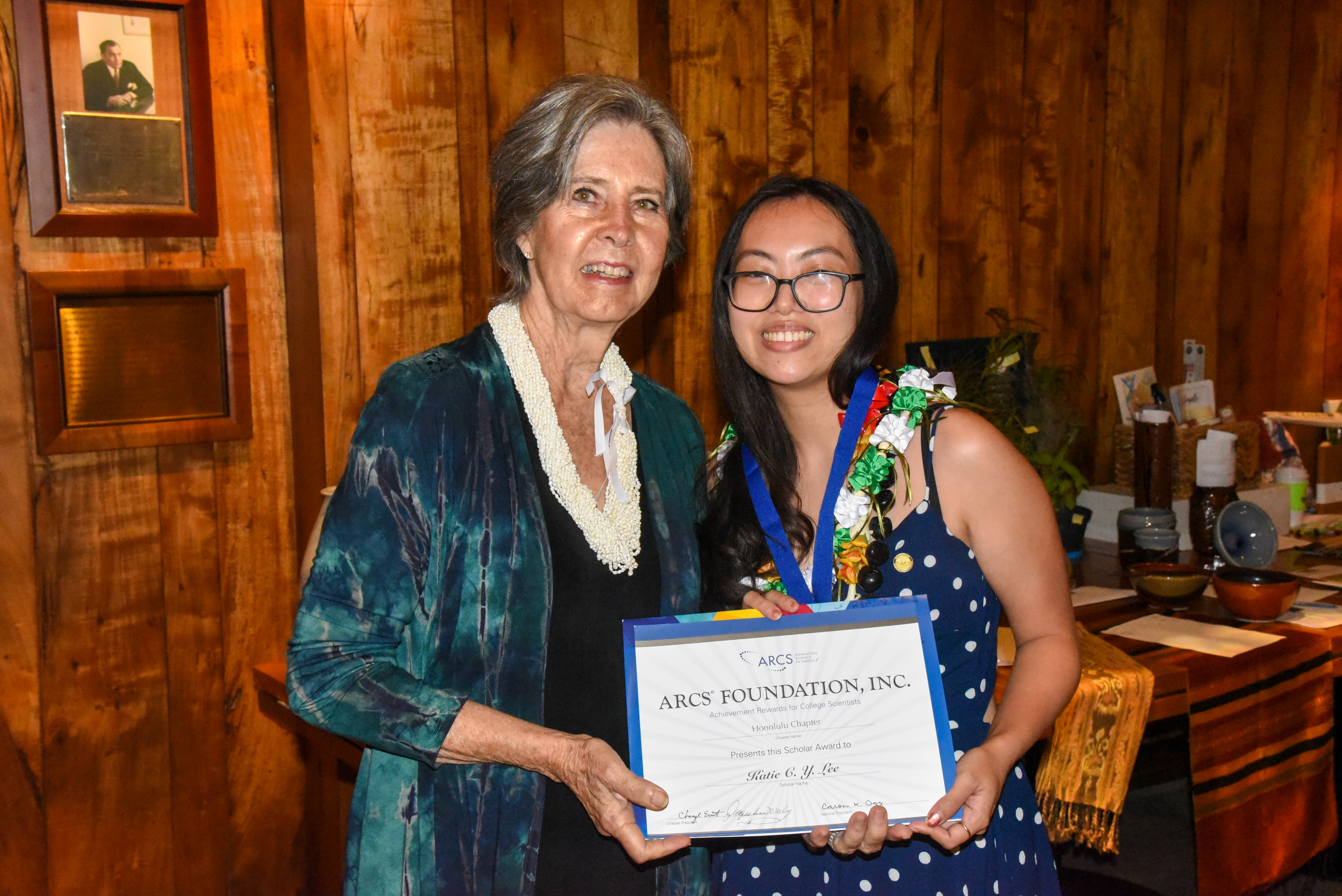
Dr. Mark Hixon on ARCS Scientist Honor
"I am especially grateful that ARCS Honolulu appreciates the mentoring of graduate students, who are society’s future scientists during an era when science is increasingly under attack."
ARCS Honolulu Chapter named marine ecologist Dr. Mark Hixon its 2021 ARCS Scientist of the Year for his remarkable record of research, mentorship and public outreach. He is the Sidney and Erika Hsiao Endowed Chair in Marine Biology and chairs the Zoology Graduate Program at the University of Hawai‘i at Manoa. Photo by Chris Pala
To Quote a Scholar: Alexandru Sasuclark
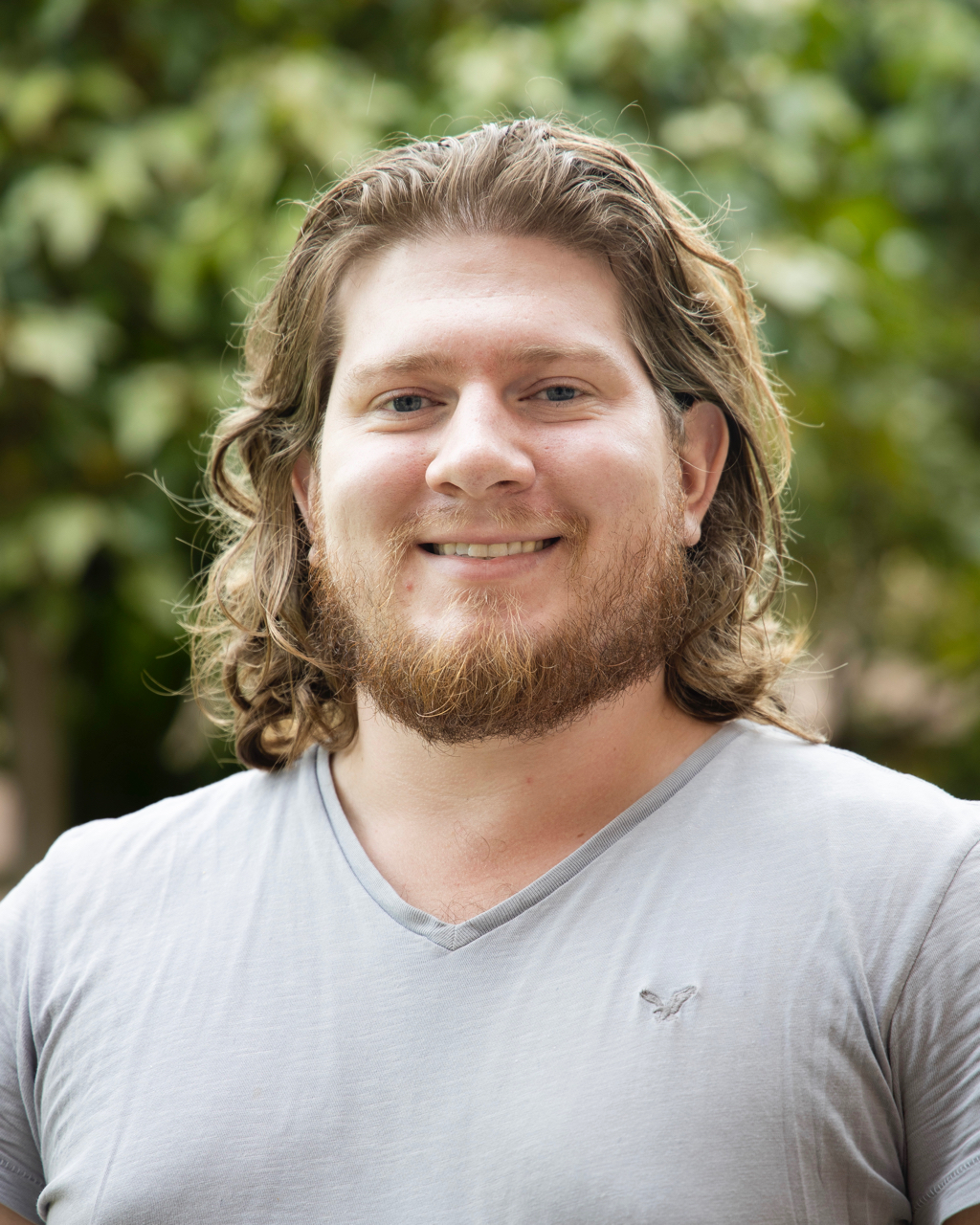 “My research, if successful, would add a new diagnostic toolset for medical professionals to assess risk for those already at a high risk for developing neuropsychiatric disorders.”
Honolulu ARCS Scholar Alexandru Sasuclark received Best Poster Presentation at the John A. Burns School of Medicine’s 2021 Annual Biomedical Sciences and Health Disparities Symposium. The George and Virginia Starbuck ARCS Award receipient studies the role of selenium in development of particular neurons in the brain and the perineuronal net structures that surround them. Disruption in their development is characteristic of many neurodevelopmental diseases. A University of Hawai‘i at Manoa PhD candidate in Cell and Molecular Biology, Alexandru aspires to a career in industry pursuing treatments for neurological ailments.
Read about his inspiration or watch his video
Scholar Update: Oceanographer Amy Baco-Taylor
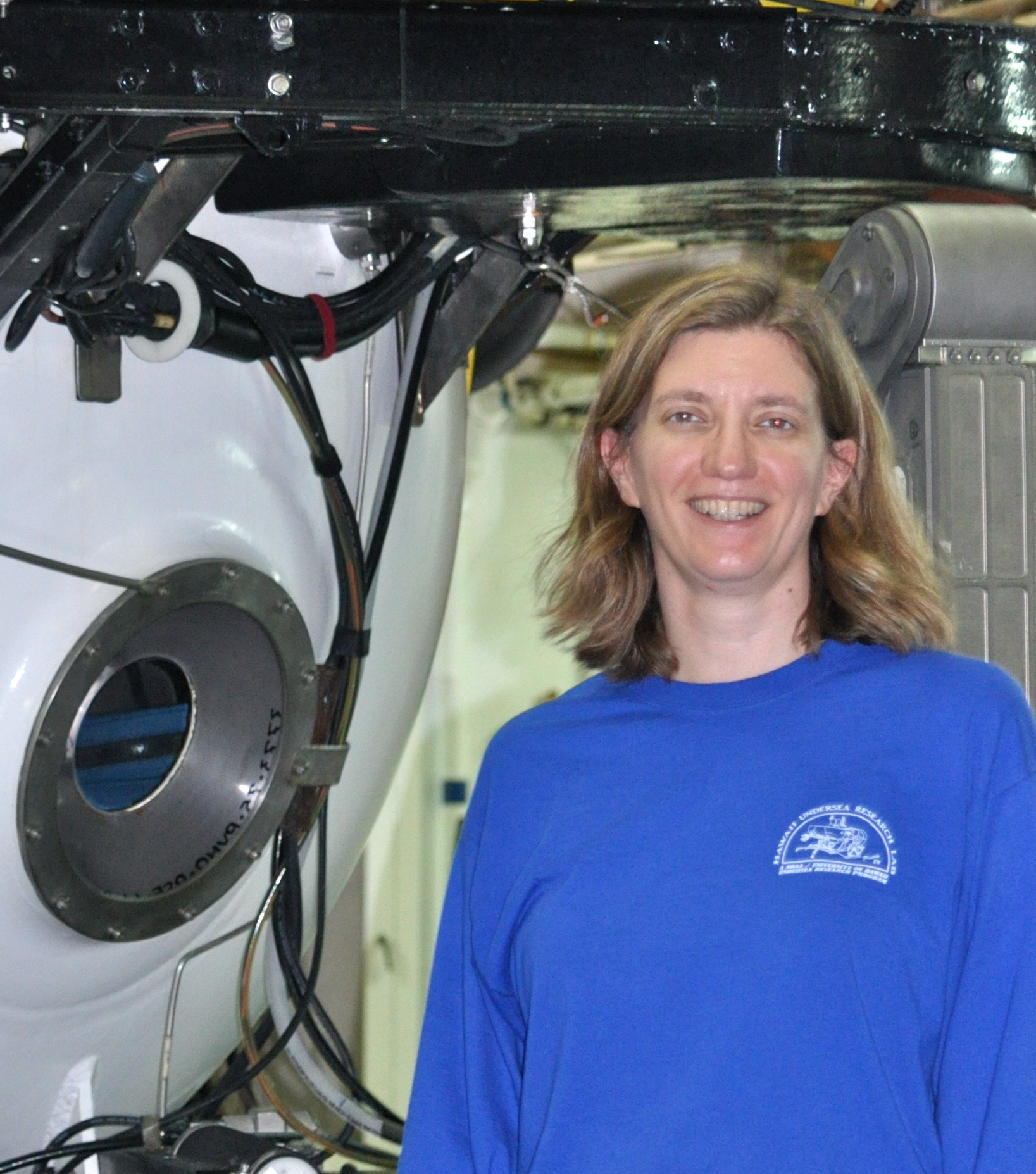
“Because most species in the deep sea are slow growing and long-lived, deep-sea species are actually more vulnerable to human impacts than many shallow-water ecosystems.”
– 1999 Honolulu ARCS Scholar Dr. Amy Baco-Taylor, explaining the importance of her research on deep sea ecosystems in a Q&A on the Florida State University website where she is now a professor in the Department of Earth, Ocean and Atmospheric Science. Read the profile